Ian Wallace
Surface / Structure / Street: Works 1986–2014
September 17–November 7, 2026
Catriona Jeffries
A picture begins and ends with its frame. Ian Wallace has spent six decades investigating the ways in which frames condition the perception of their contents. The artist’s work—which typically brings verité photography and minimalist painting strategies together on stretched canvas surfaces—explores the frame as an alternatingly opaque or transparent aspect of an image, structuring a “view through a window into a world in which the illusory image act[s] as a simulation of an imaginary space and subject.”1
But in the time of modernity, these illusory qualities became suspect, and representations were soon analyzed according to their constituent formal elements. Before long, the picture plane itself became an object of scrutiny, and its structural supports were similarly subjected to analysis and critique. Inevitably, this dissection parceled away any distinction between the form and content of an image, instead requiring representations to be considered within a web of infrastructural conditions and social relations. At the same time, society itself was becoming increasingly abstract, as dispersed networks and digital interfaces actualized simulatory spaces and elided traditional pictorial description.
Wallace notes that this arc of art history, whereby representations oscillated between material and metaphoric realities, led him to reconsider the expressive potential of painting as a model for photography. “When the self-reflexive aesthetic issues implicit in modernist abstract painting are applied to photography, the question of framing becomes paramount.”2
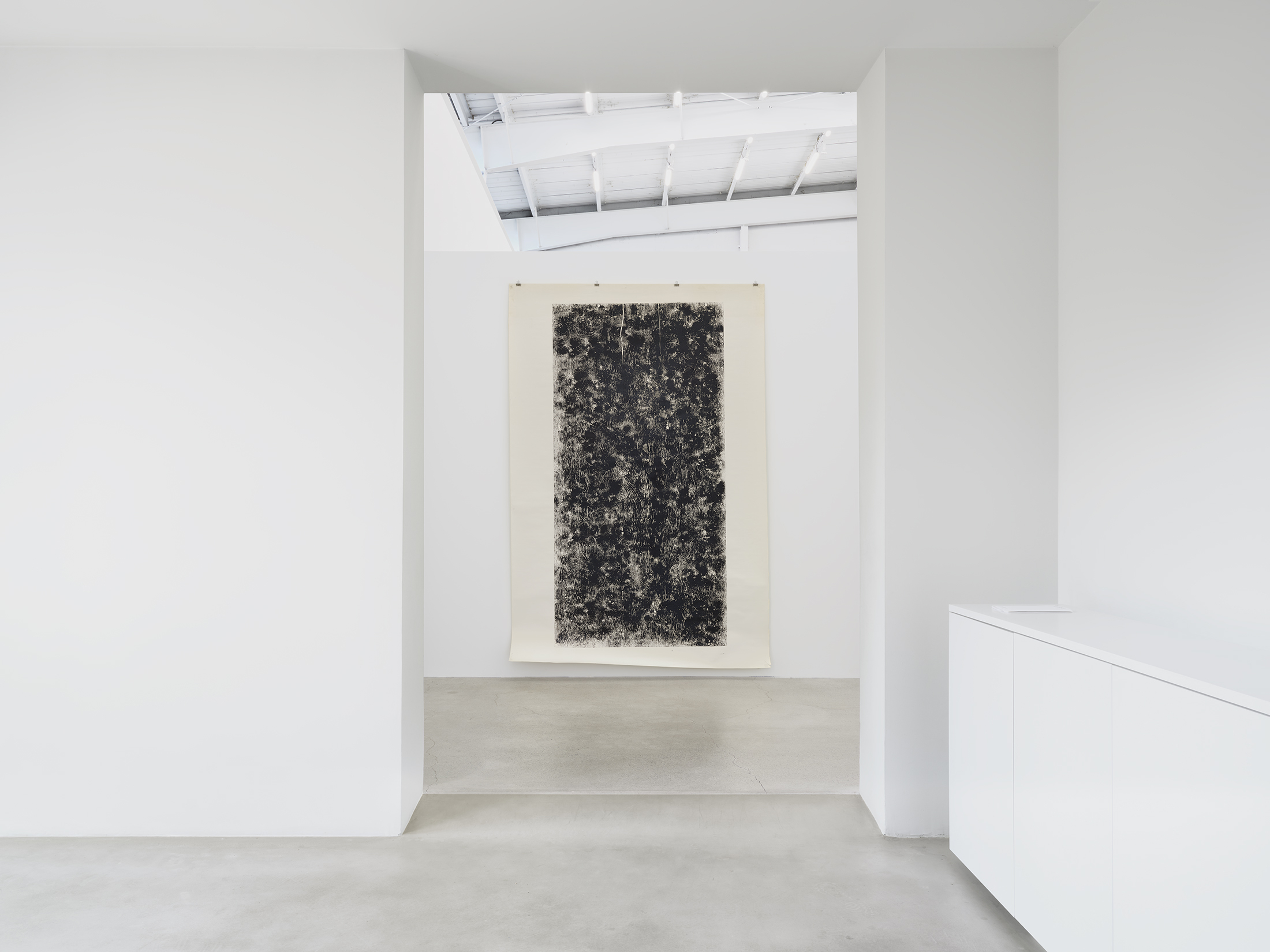
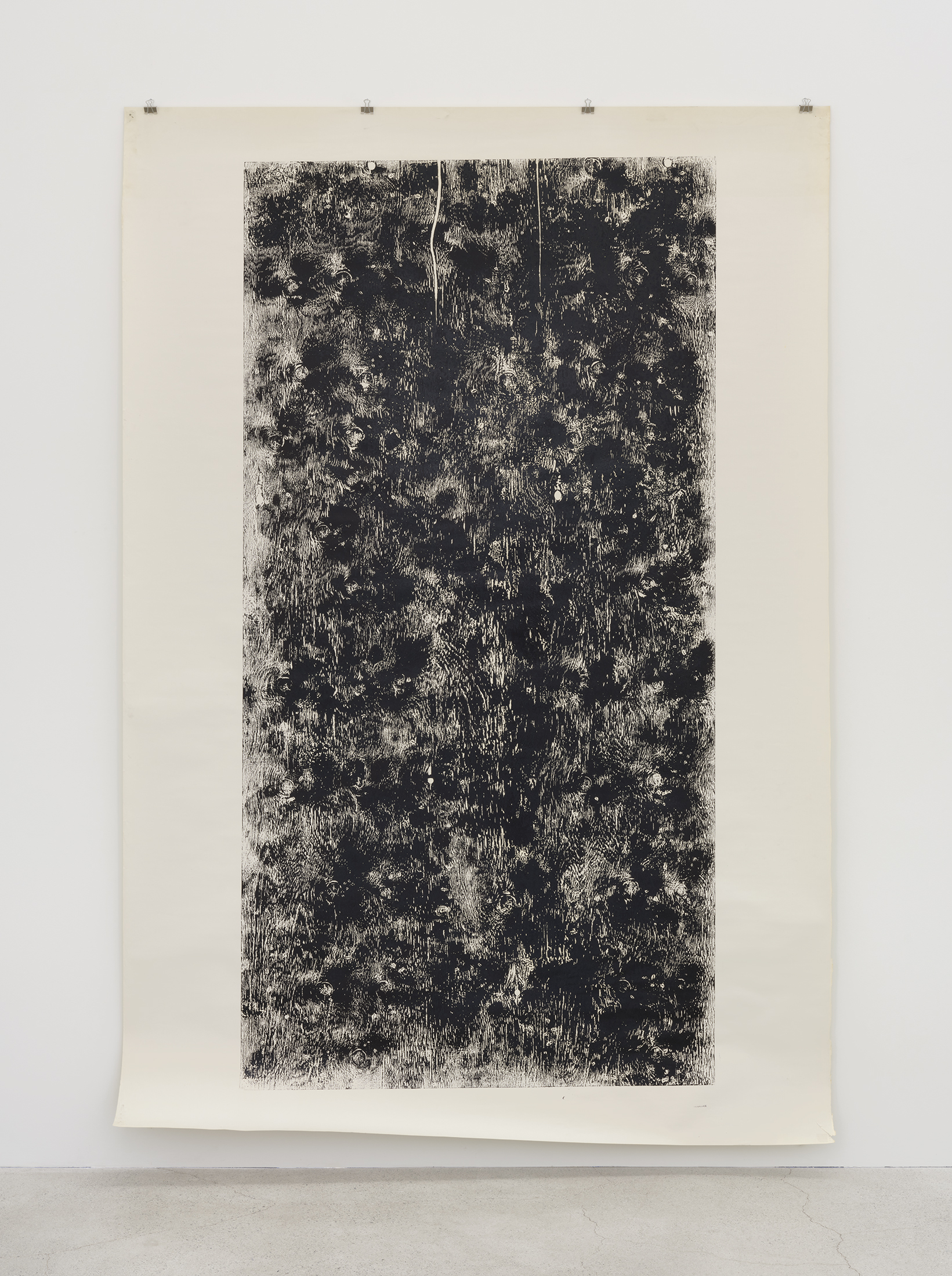
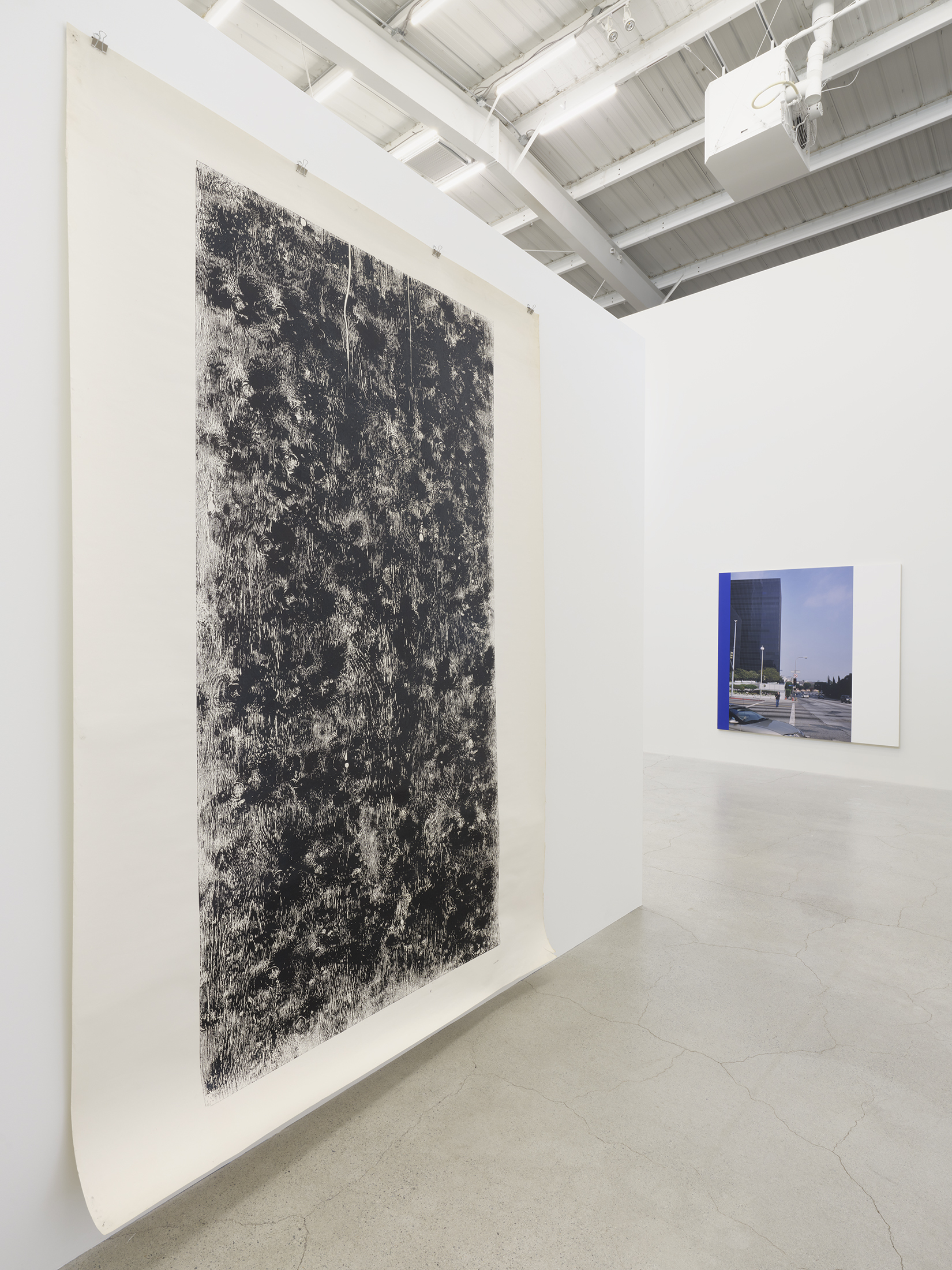
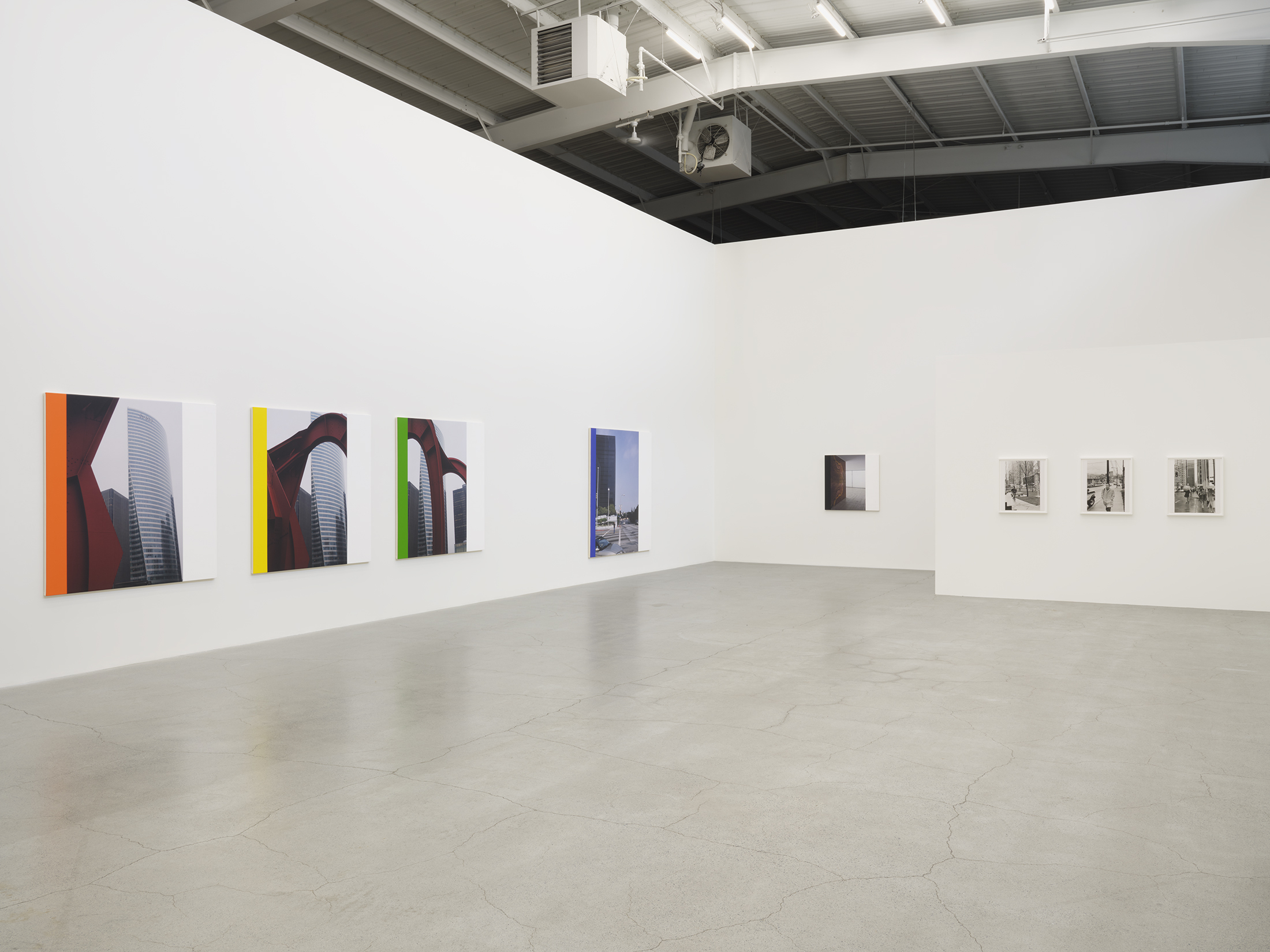
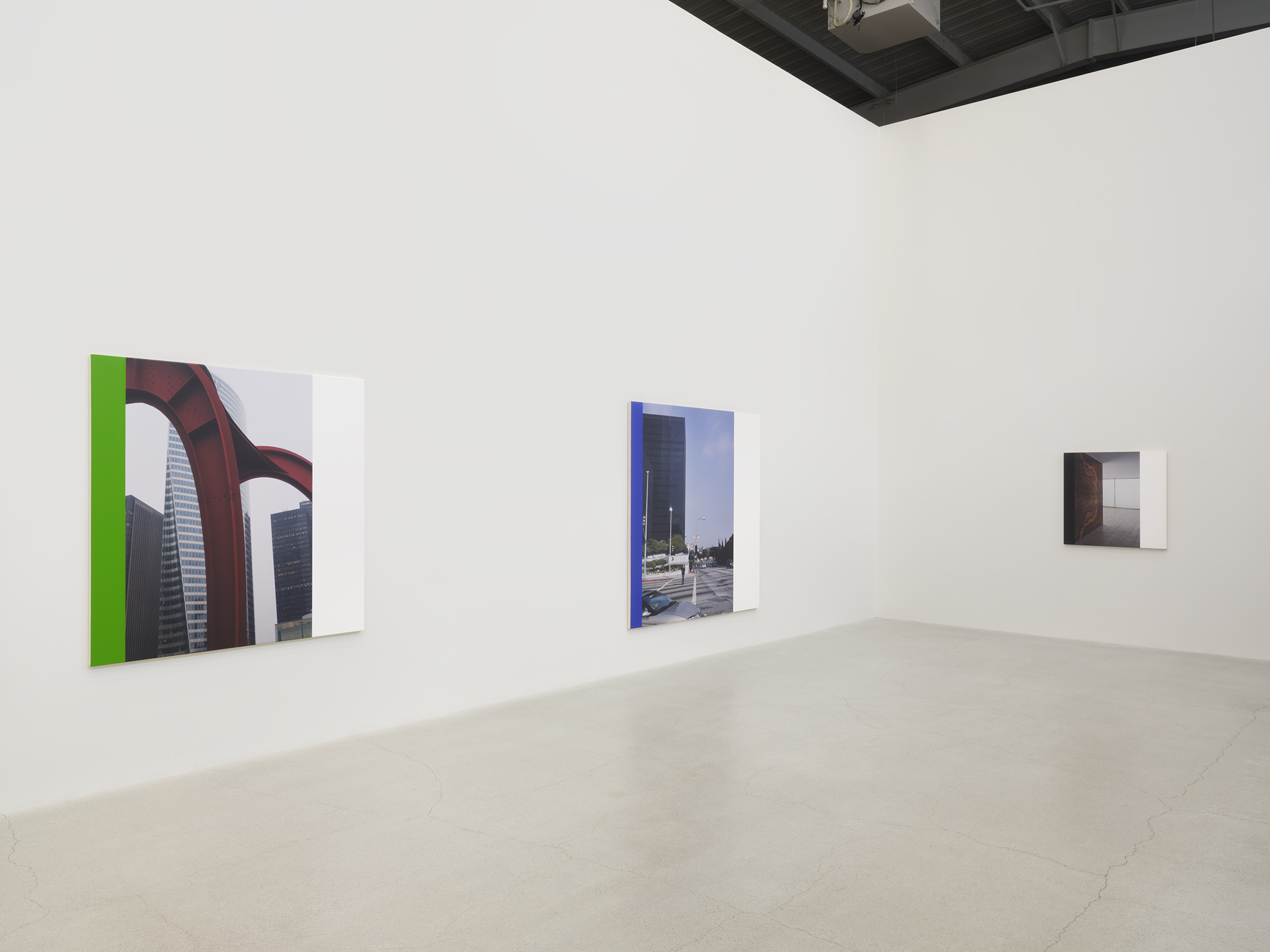
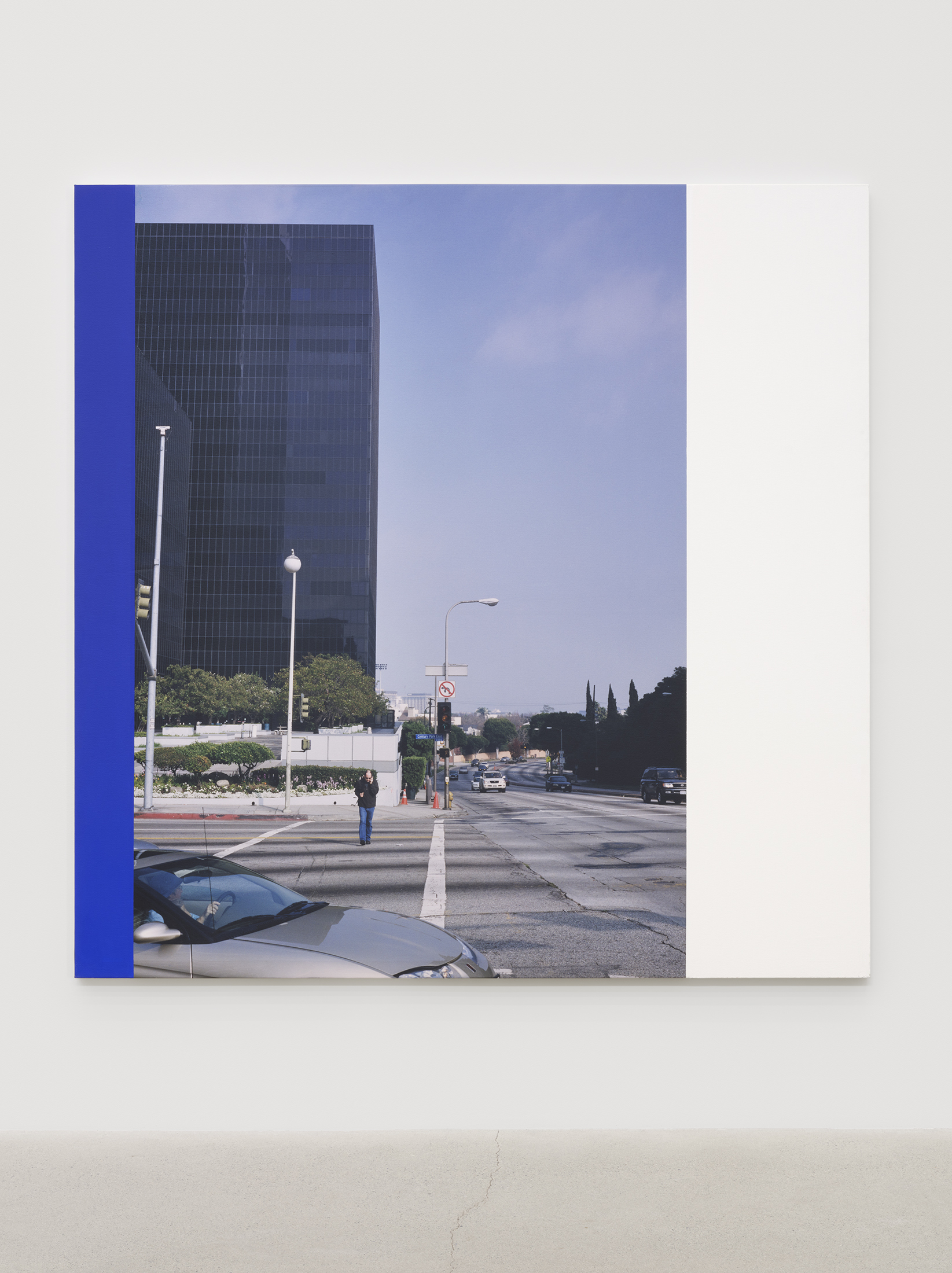
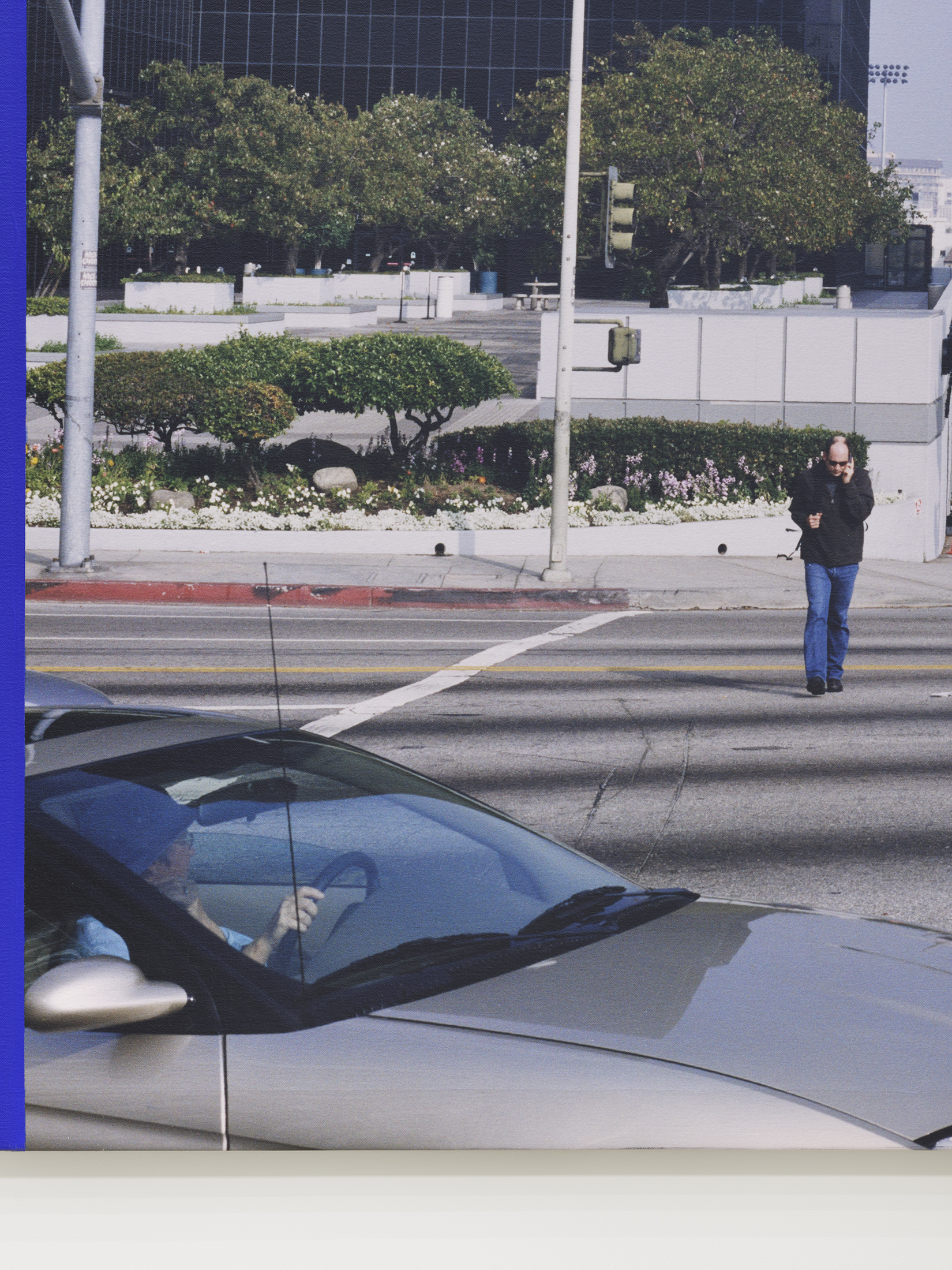
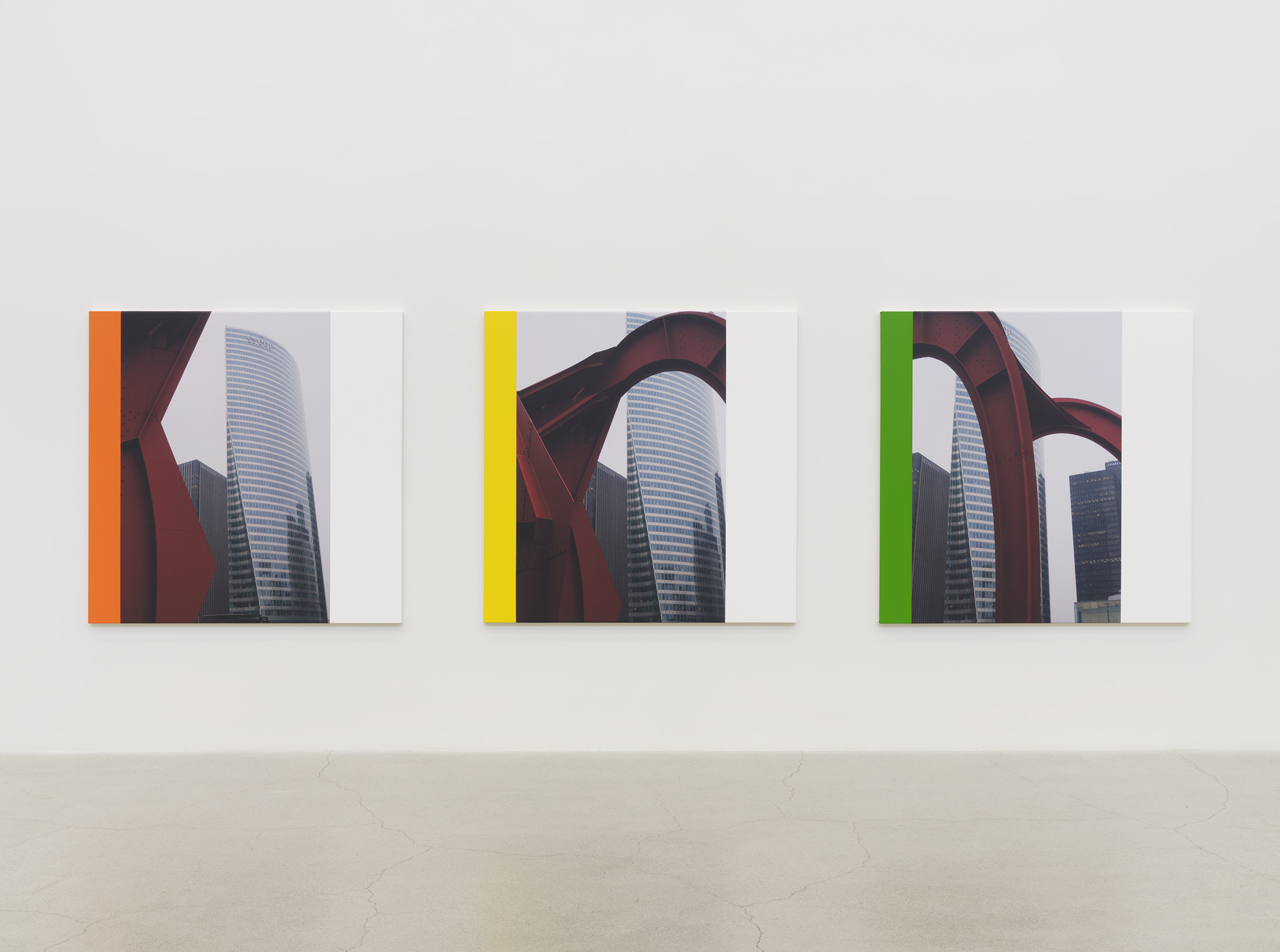
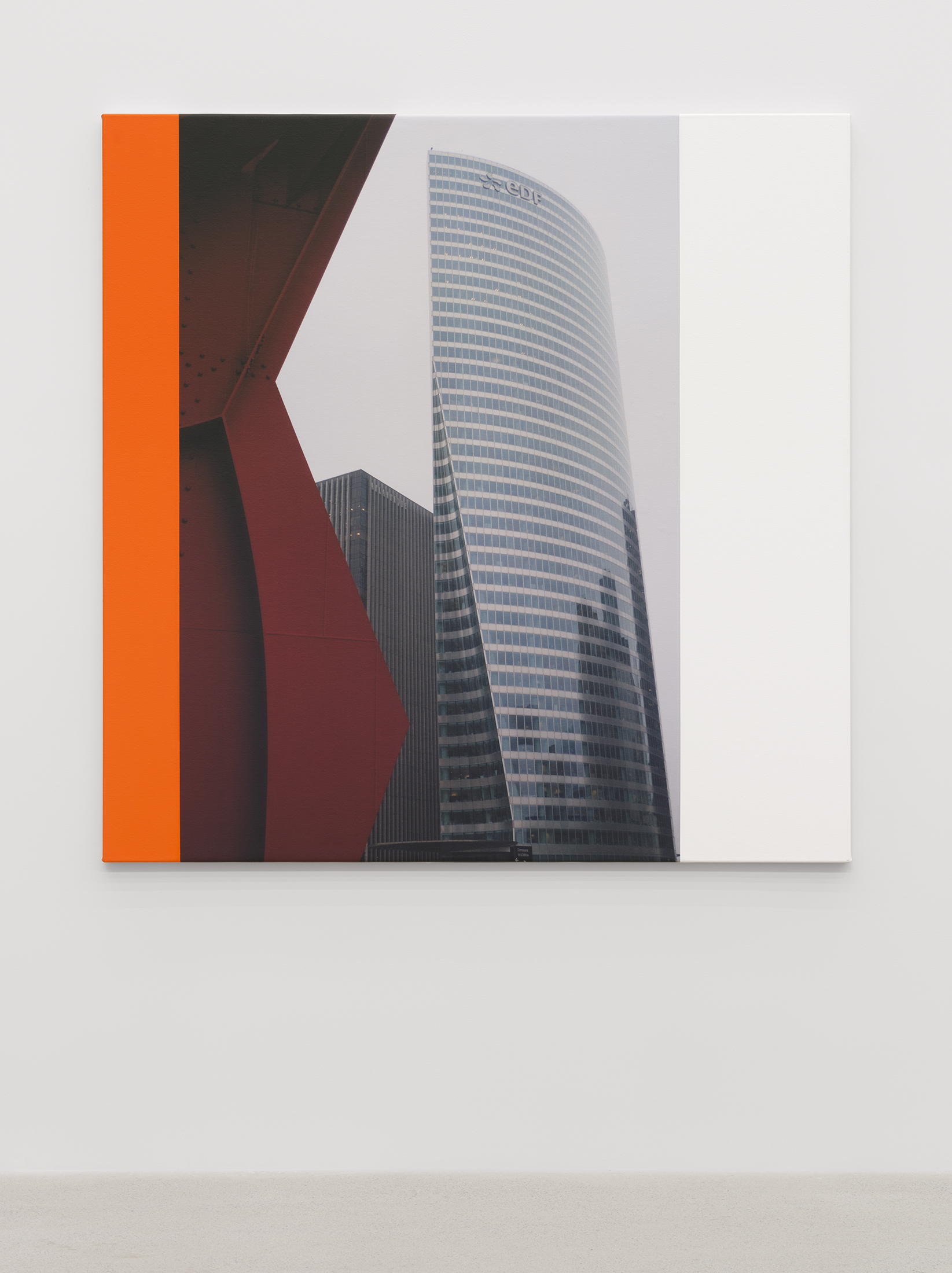
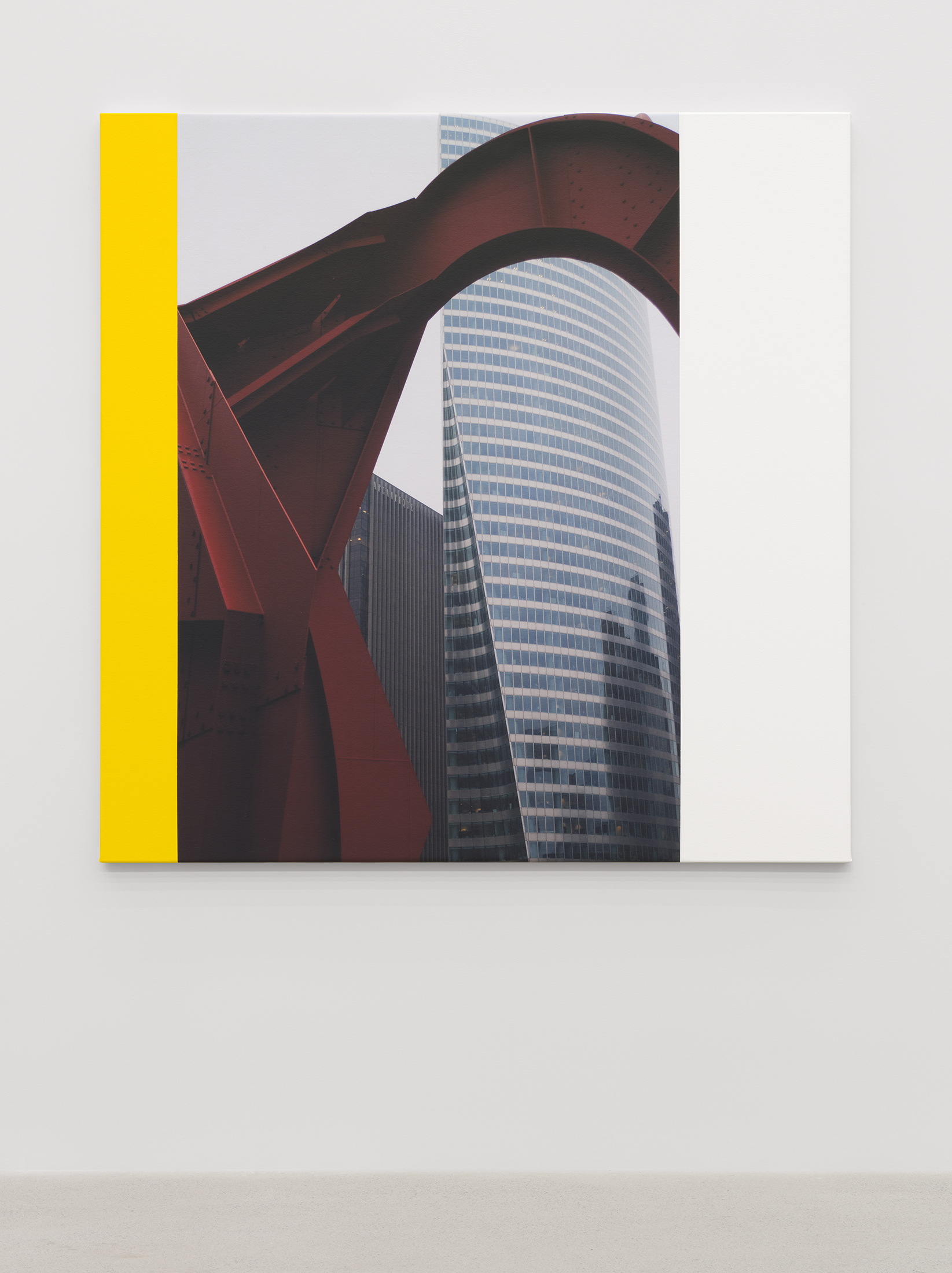
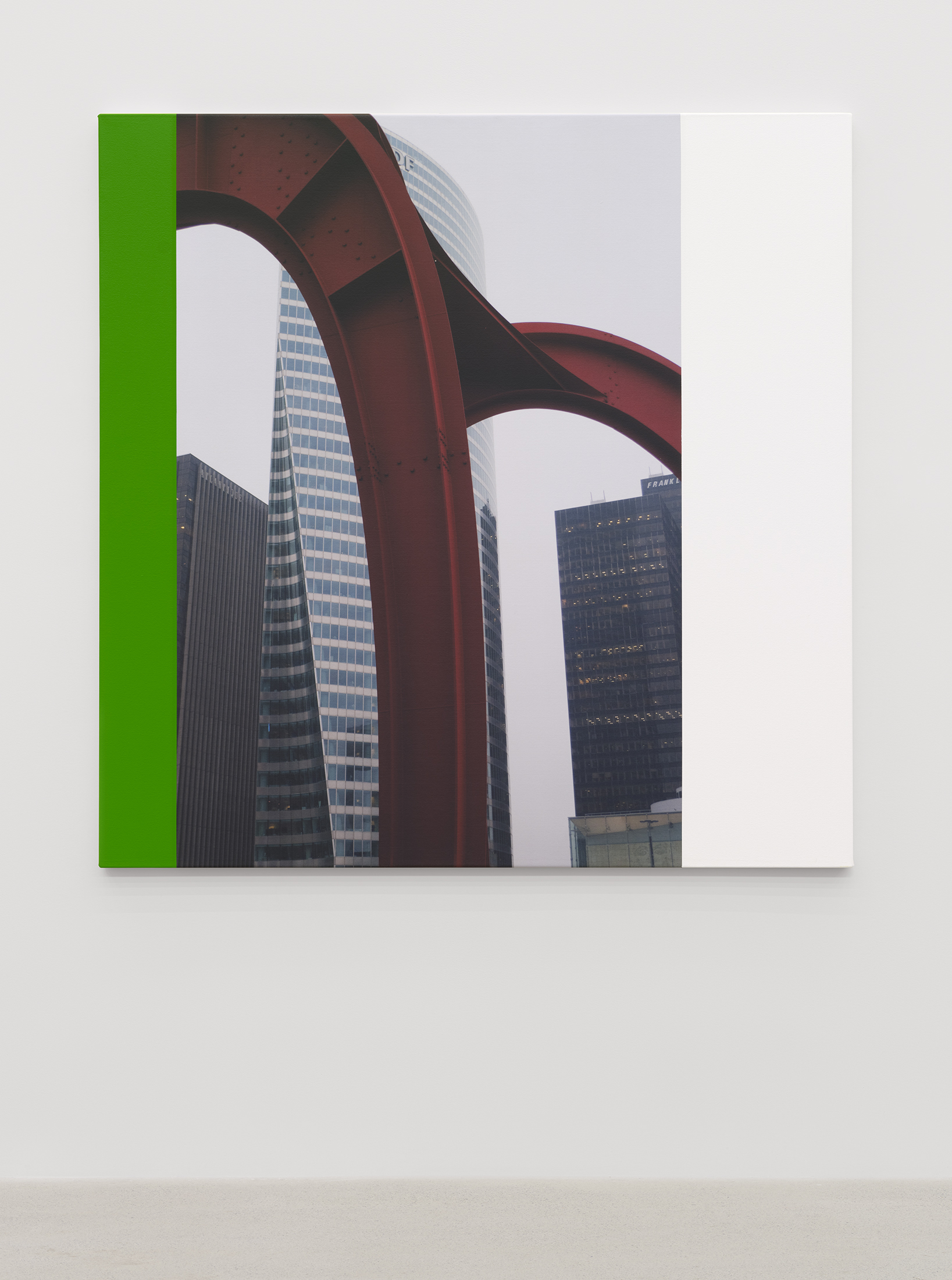
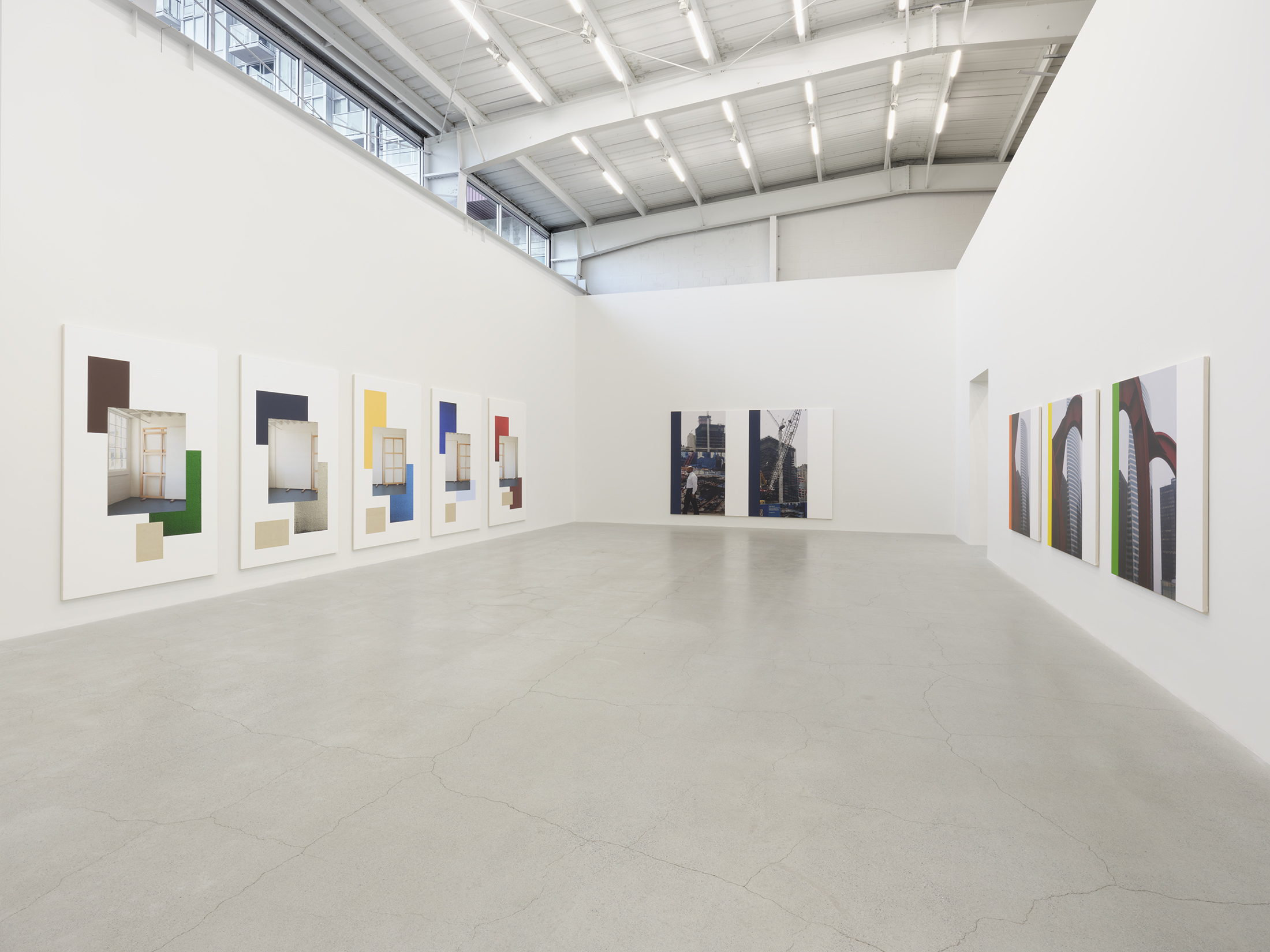
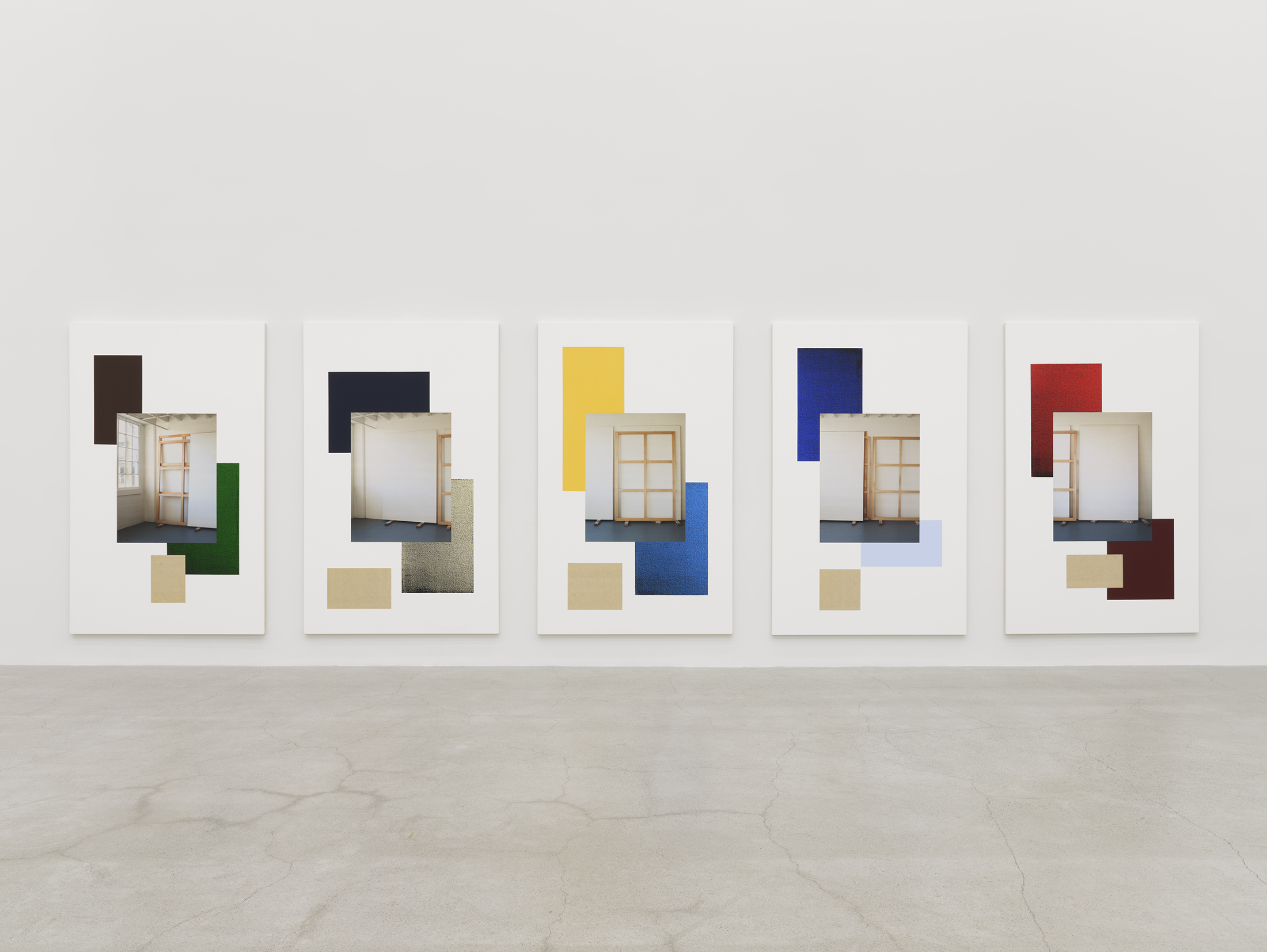
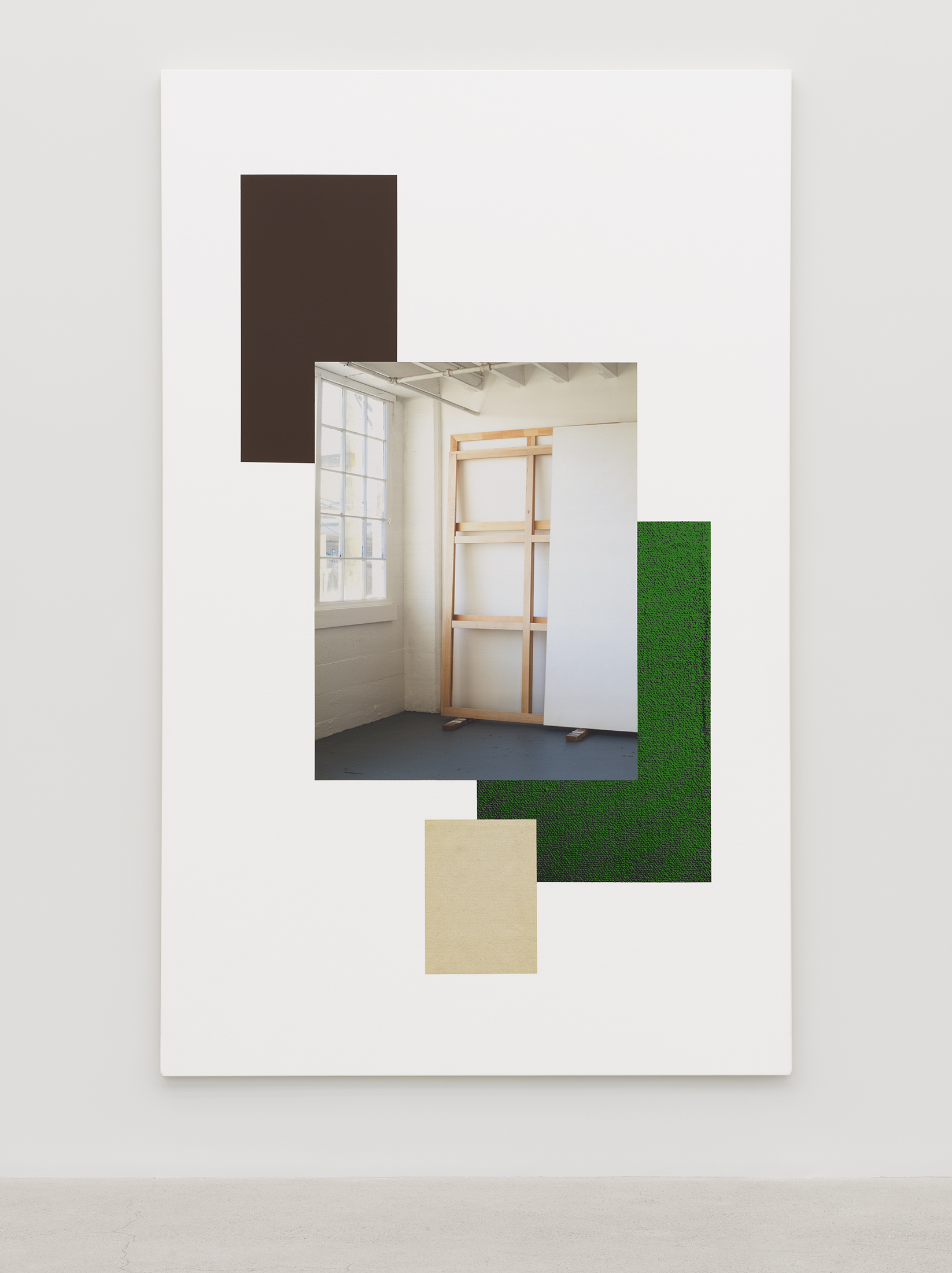
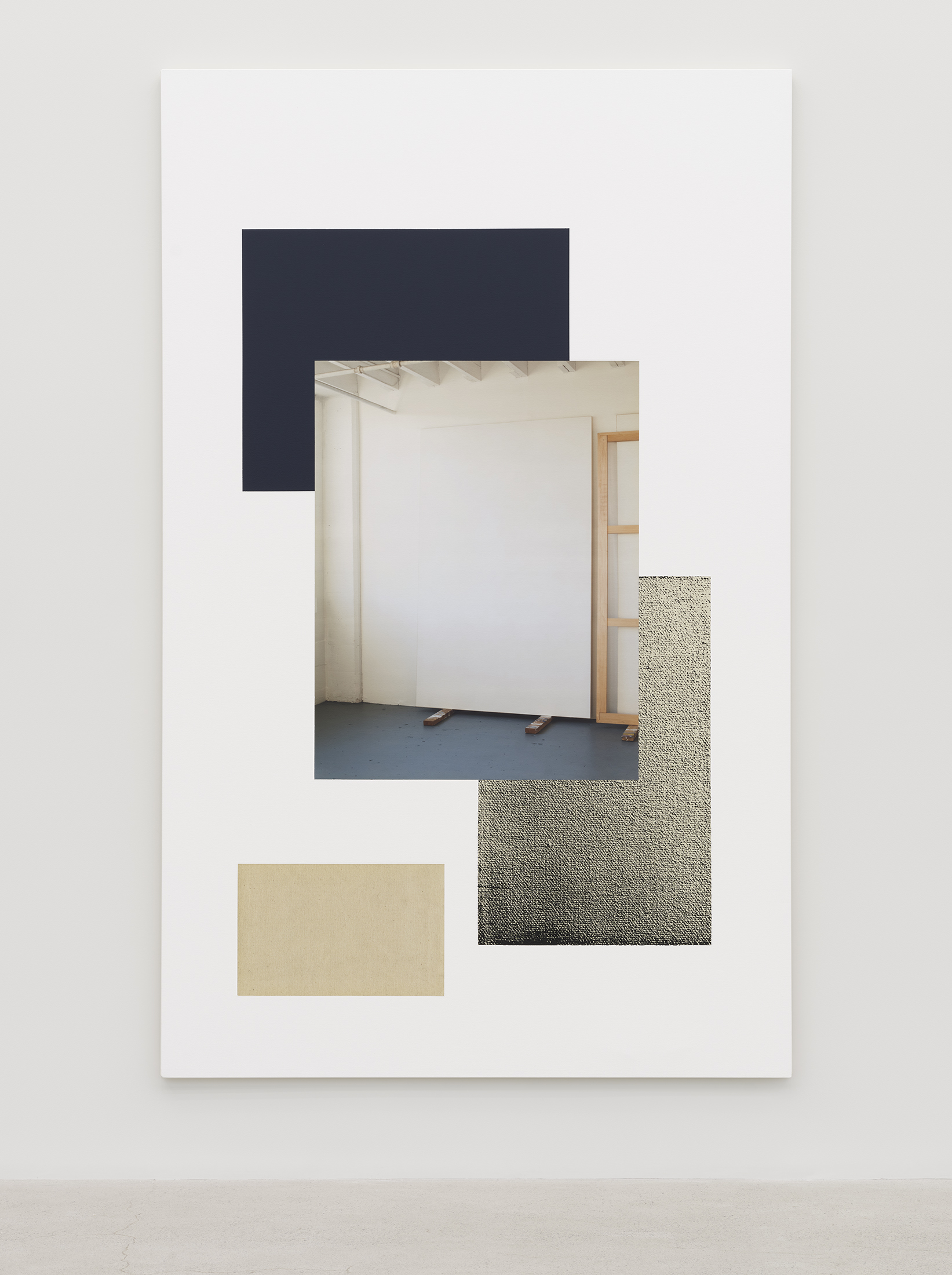
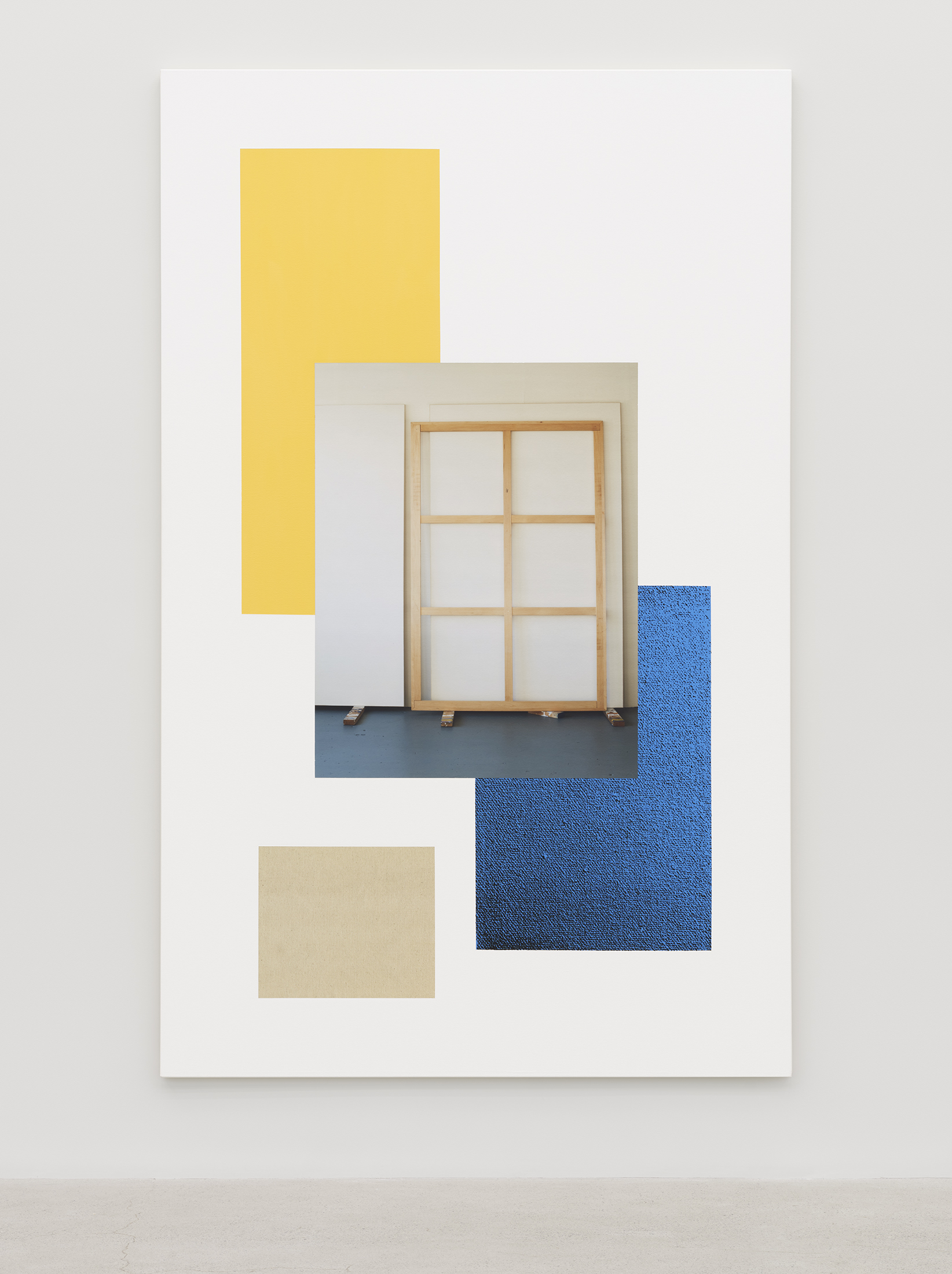
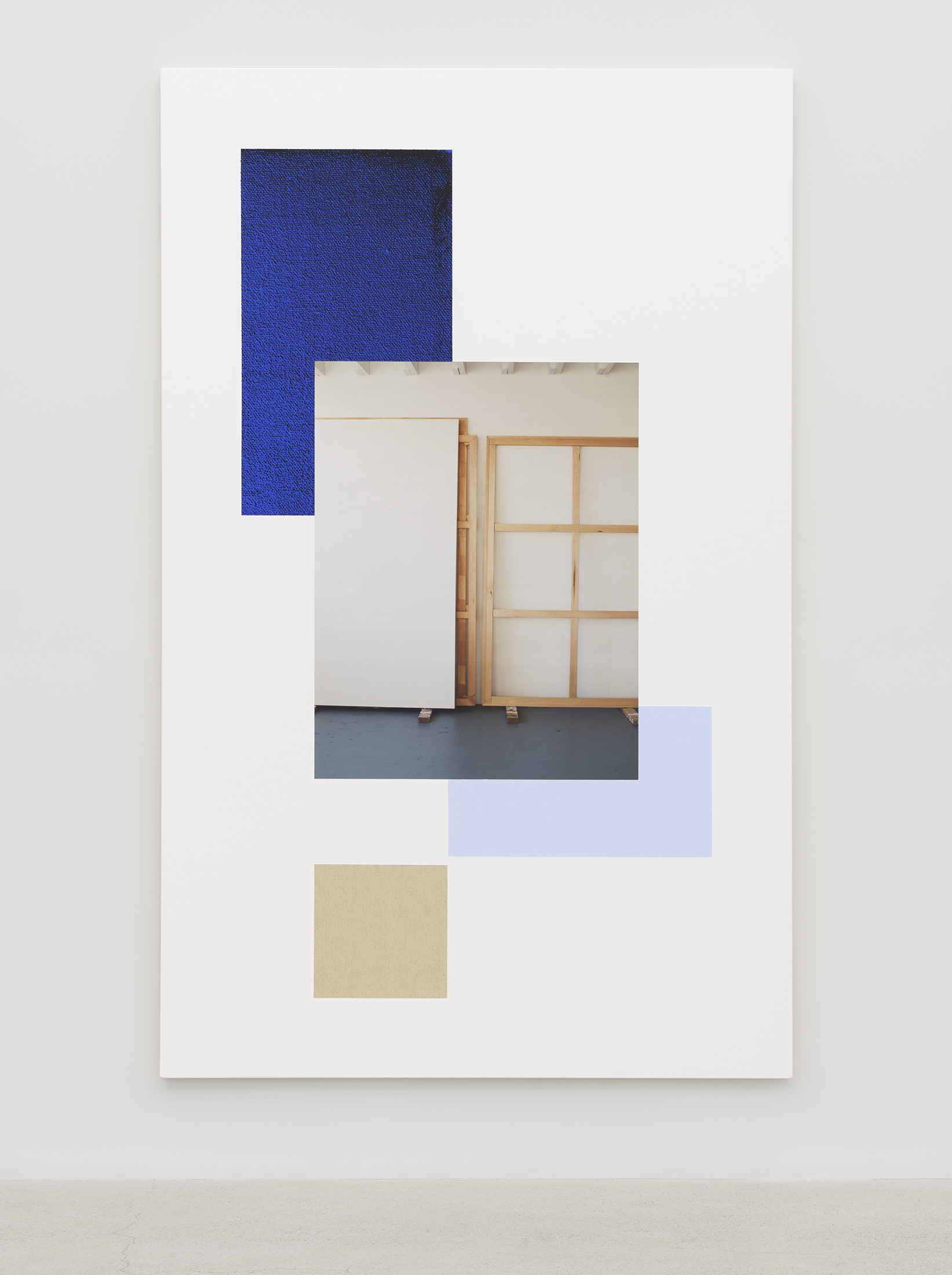
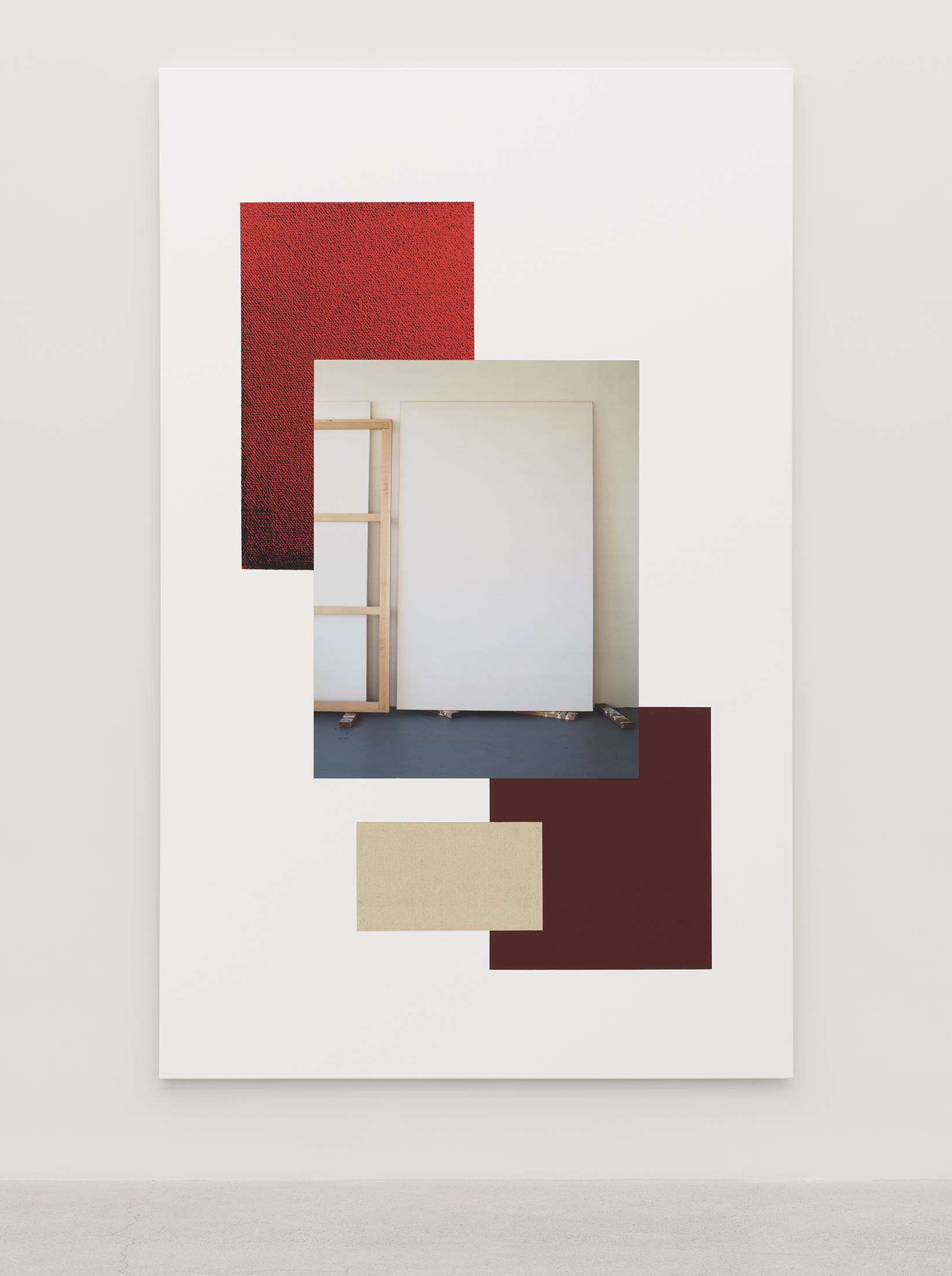
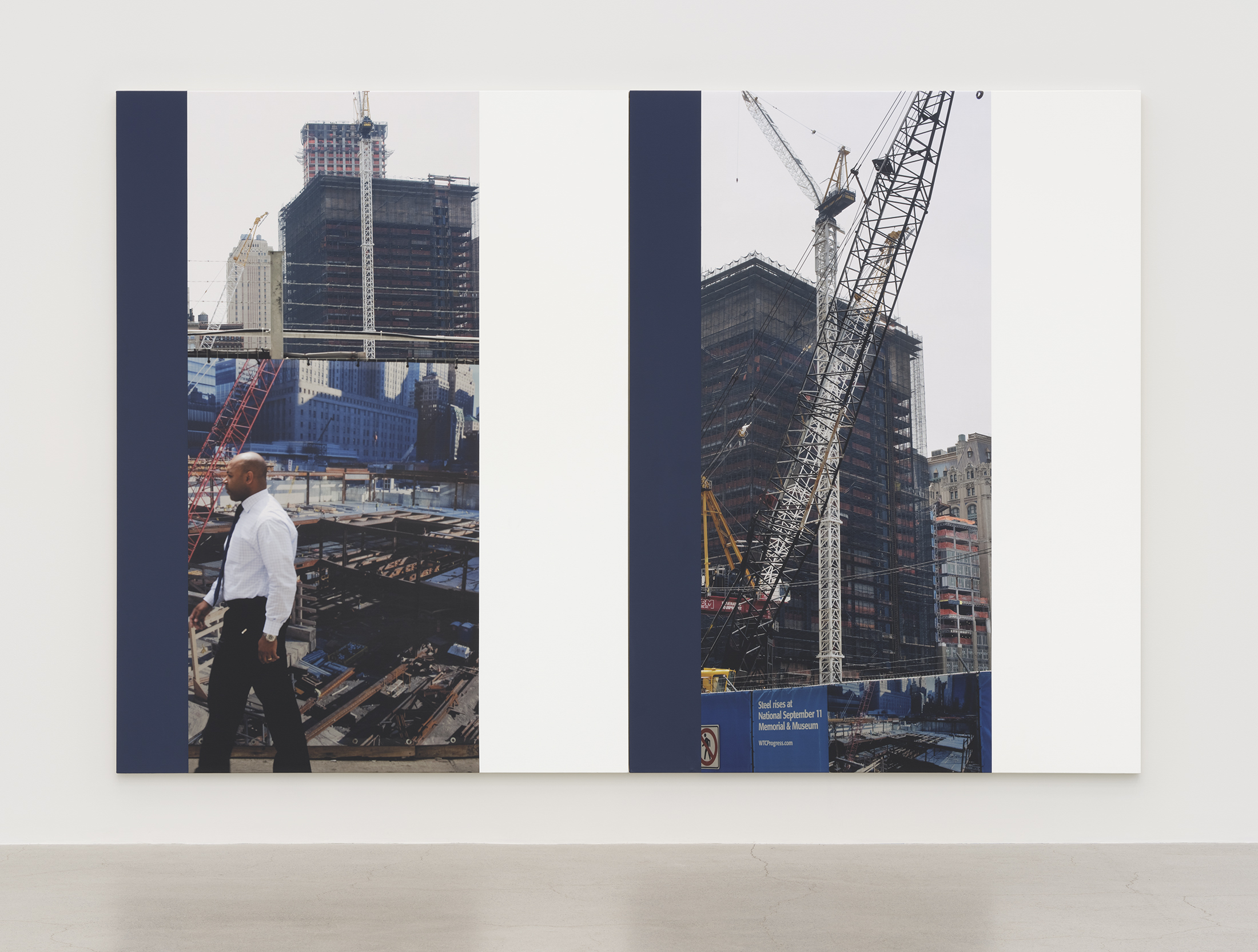
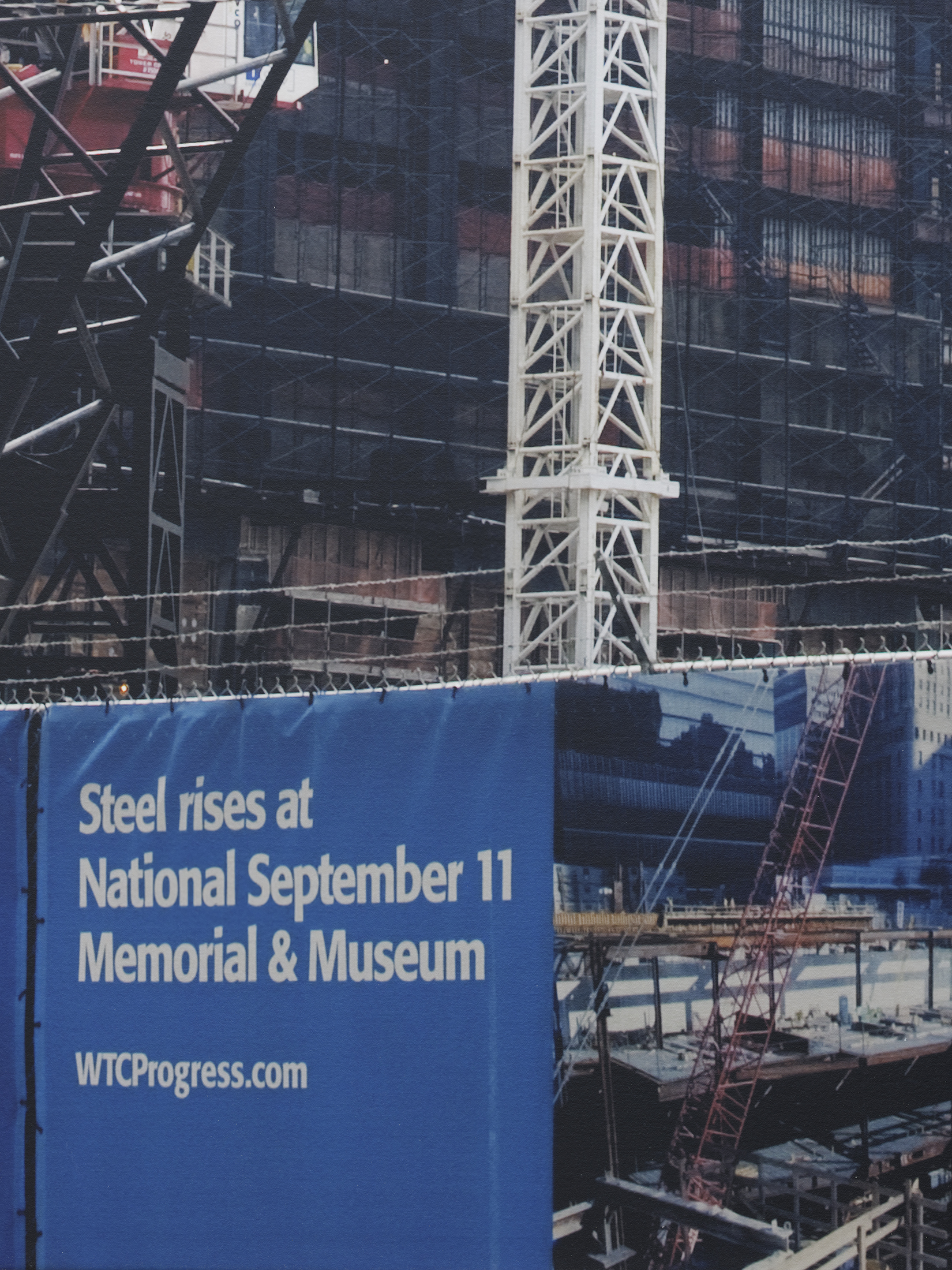
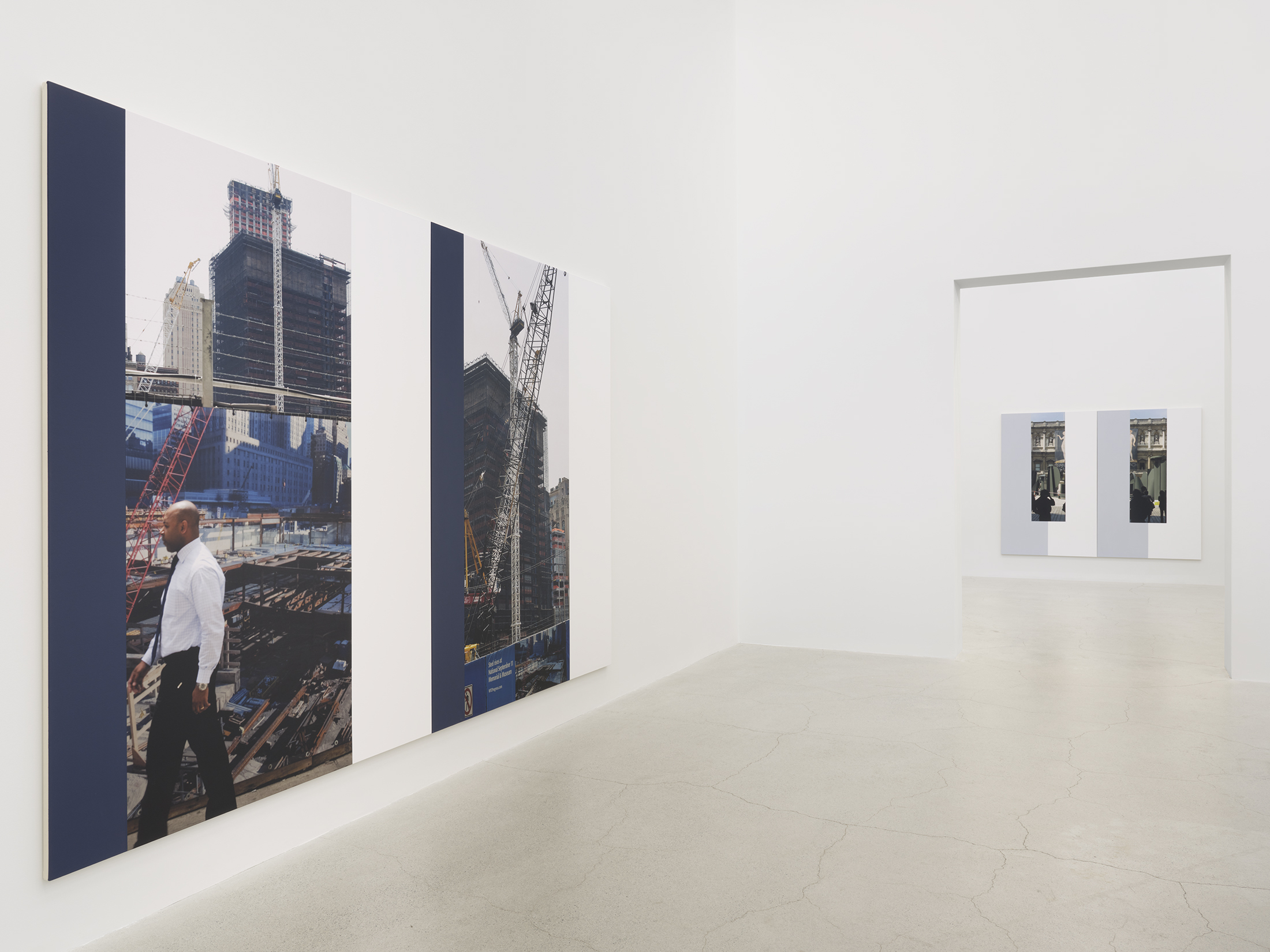
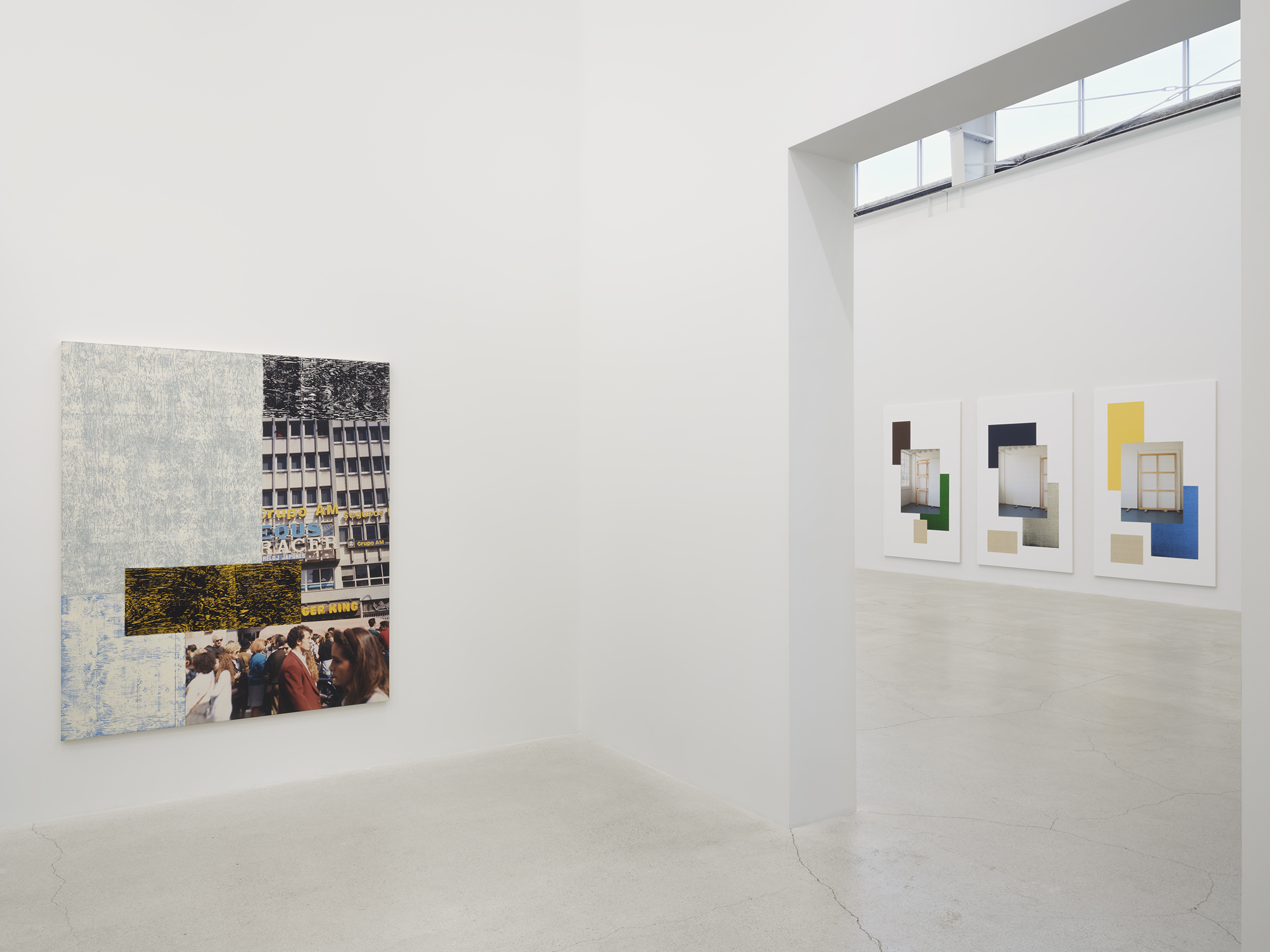
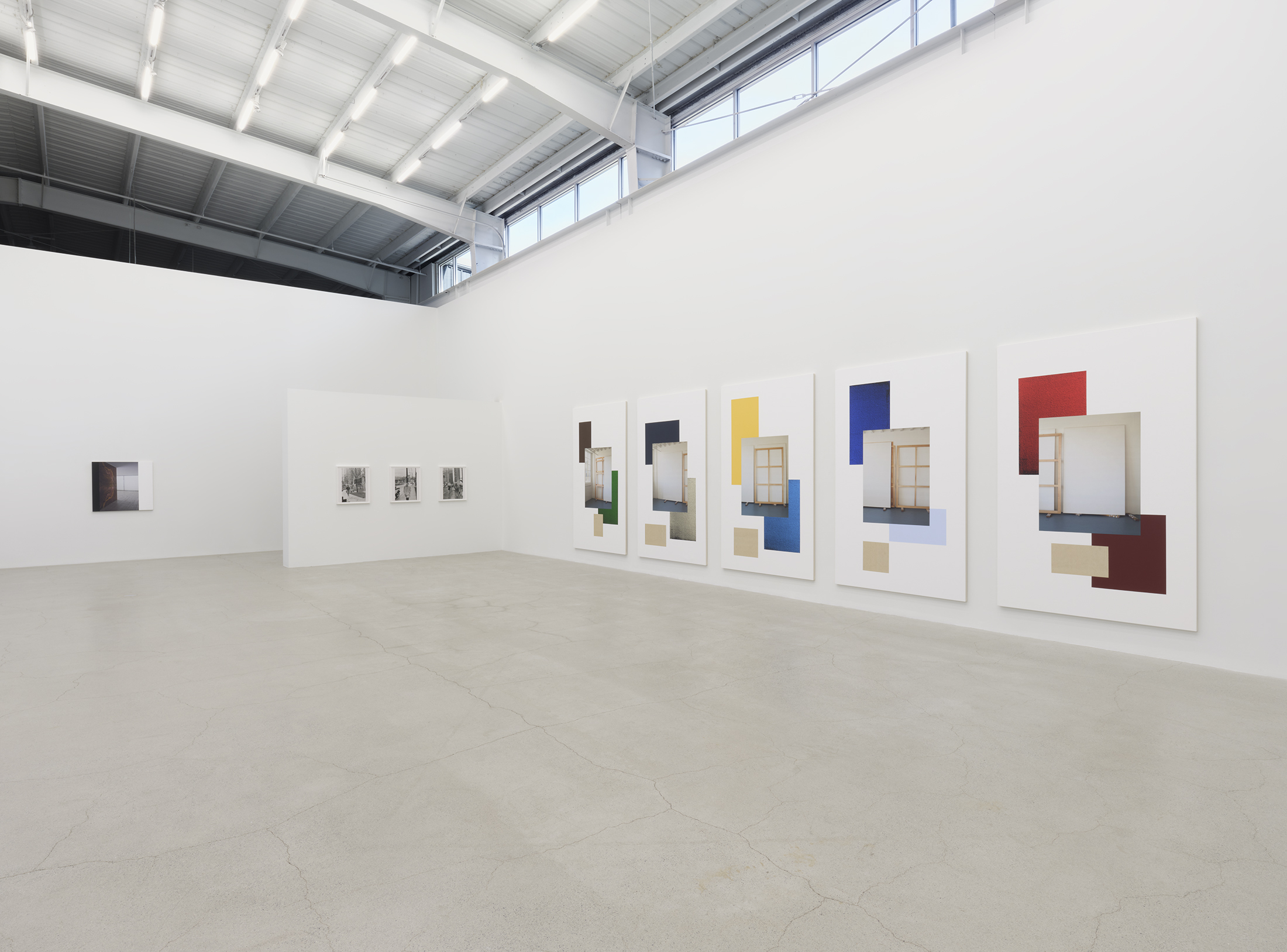
In the works on view in Surface / Structure / Street: Works 1986–2014, we are given pictorial examples of frames represented by bare canvas stretchers, skyscrapers with steel skeletons, and multicellular glass grids, as well as the delineations of architectural sightlines, traffic lines, and city skylines, all underscored by Wallace’s characteristic montage of images surrounded by blocks of colour on canvas.
When the framework is complete, it becomes a support structure for the picture plane. We see the wooden stretchers sheathed in canvas, the skeletal buildings clad in glass. The frame is not just a pictorial crop, but the delineating condition for its imaginary space and subject.
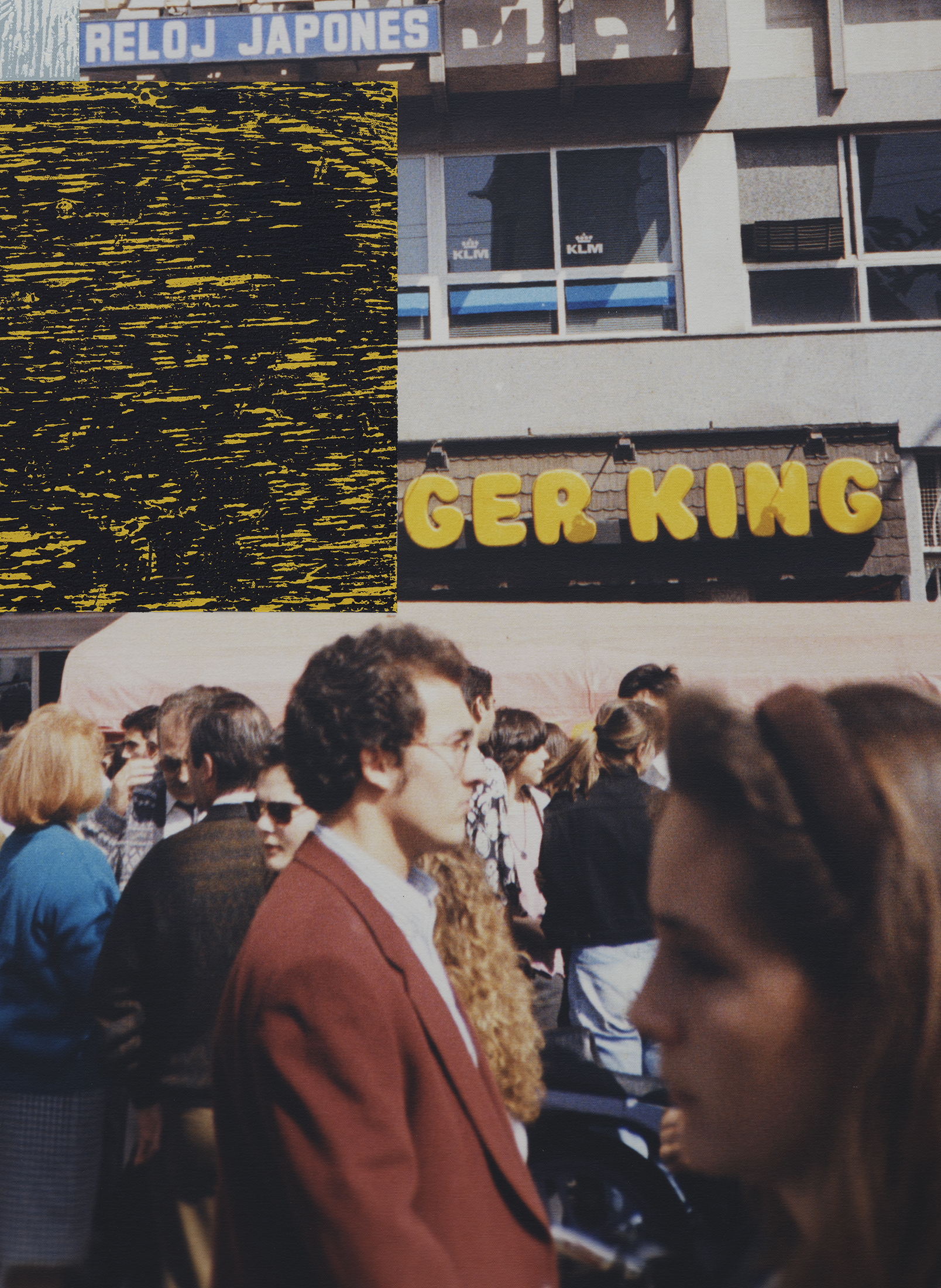
Wallace writes that “the wall functions as a screen for a sequence of pictures and thus constructs what is, in effect, a text of images.”3 The buildings of New York, Paris, and Los Angeles which appear throughout this exhibition rise as walls par excellence—the windows that frame godlike views of the surrounding metropolises are impenetrable from the outside. What is written upon their surfaces? What can be read within the picture frame of a city skyline? Prior bodies of work focused on New York’s Times Square or Toronto’s Financial District as sites in which the architecture—either spectacularly overloaded in advertisements, or so sleek and mirrorlike as to become completely opaque—functioned as metonymic glimpses of modernism, capitalism, and the social superstructure which defines our contemporary condition. We can see urban architecture function as more than a site for shelter or business, becoming an imagistic text that conveys and withholds in equal measure. “The image of the street provides a metaphor for society at large, a framework or support for a political interpretation of pictorial material.”4
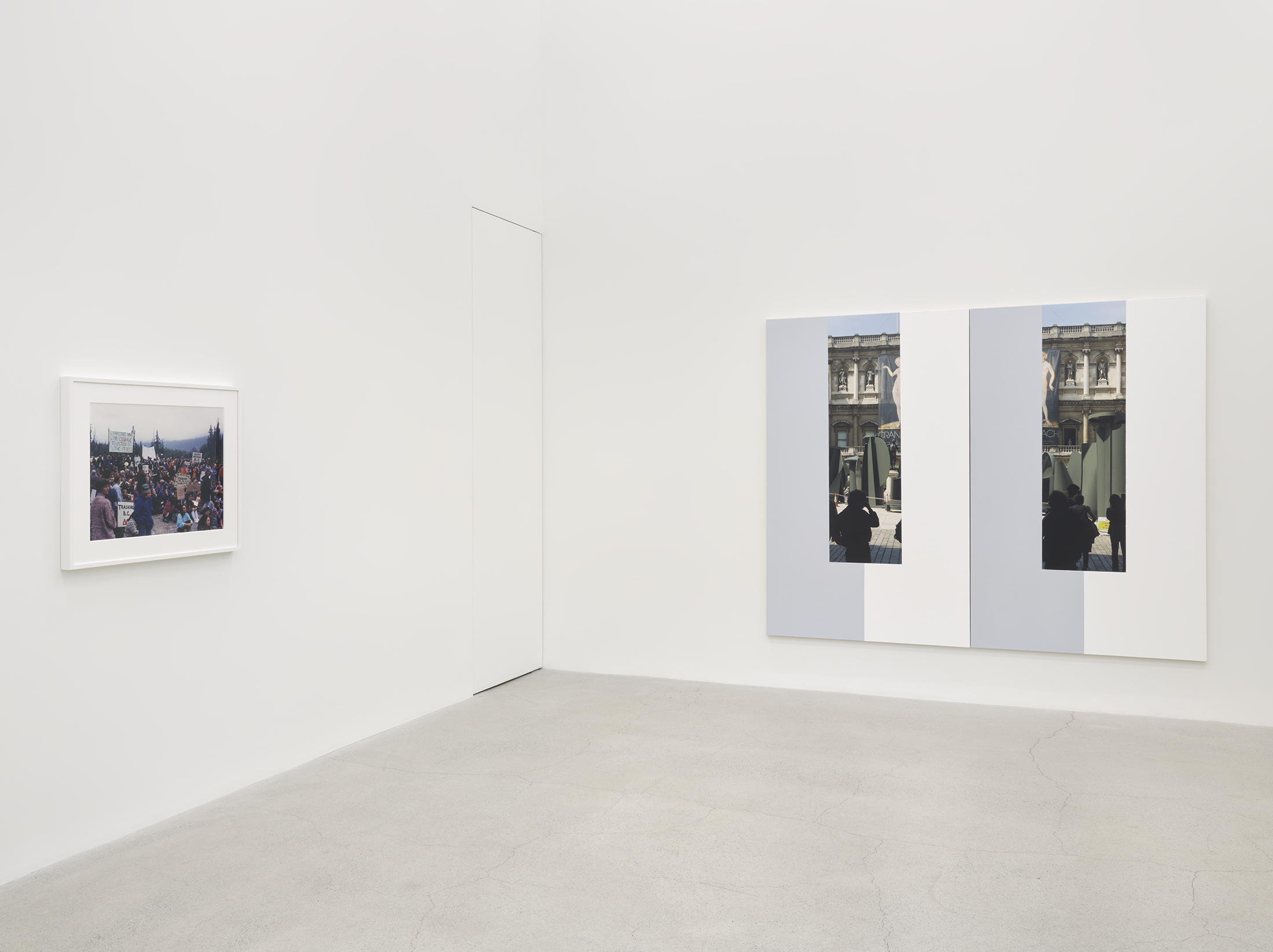
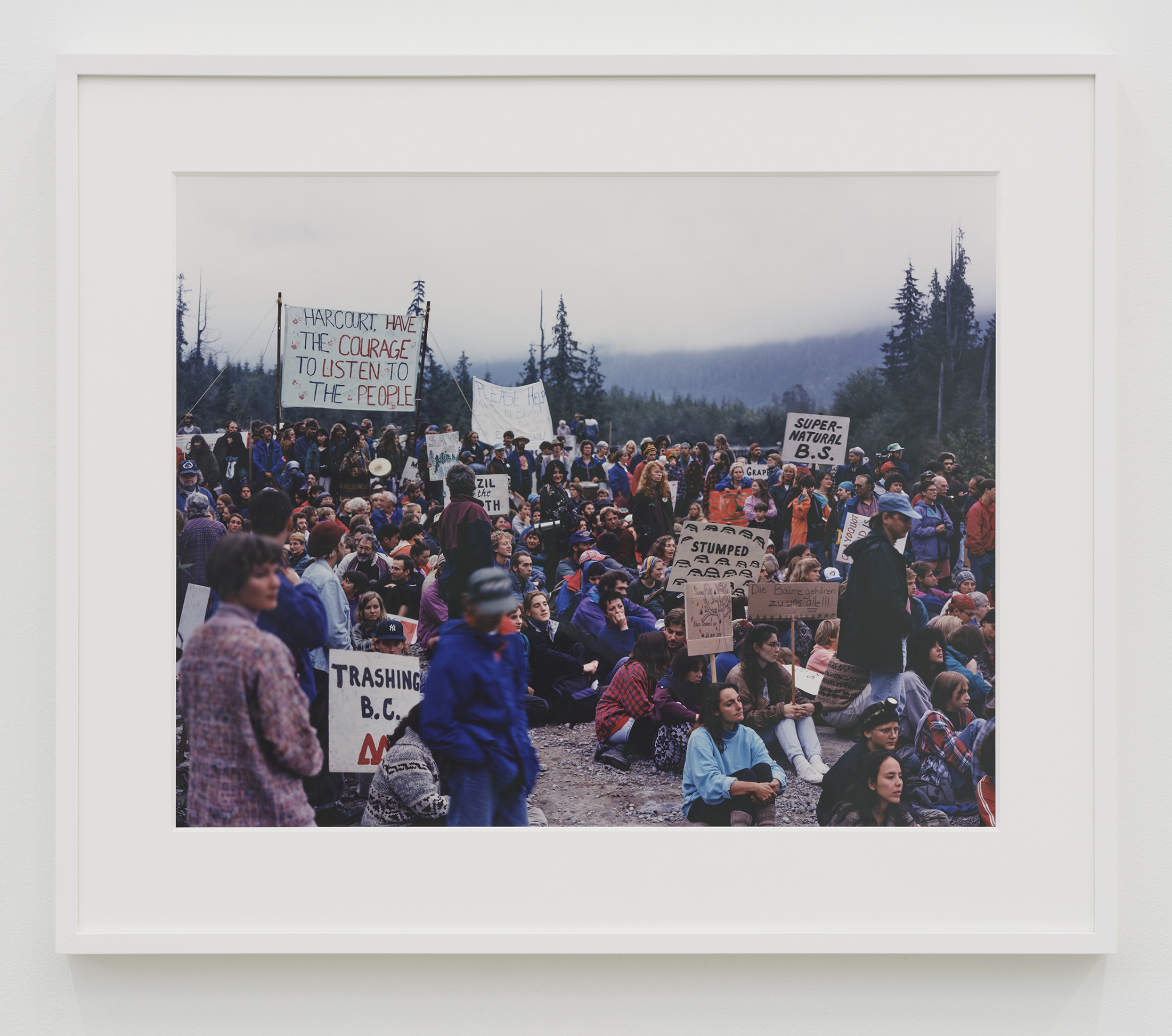
The street is the ground condition for these towers: the point of passage between them and the commonplace beyond. Yet in Clayoquot Protest (August 9, 1993) (1993), a logging road replaces the street as a theatre of public action.
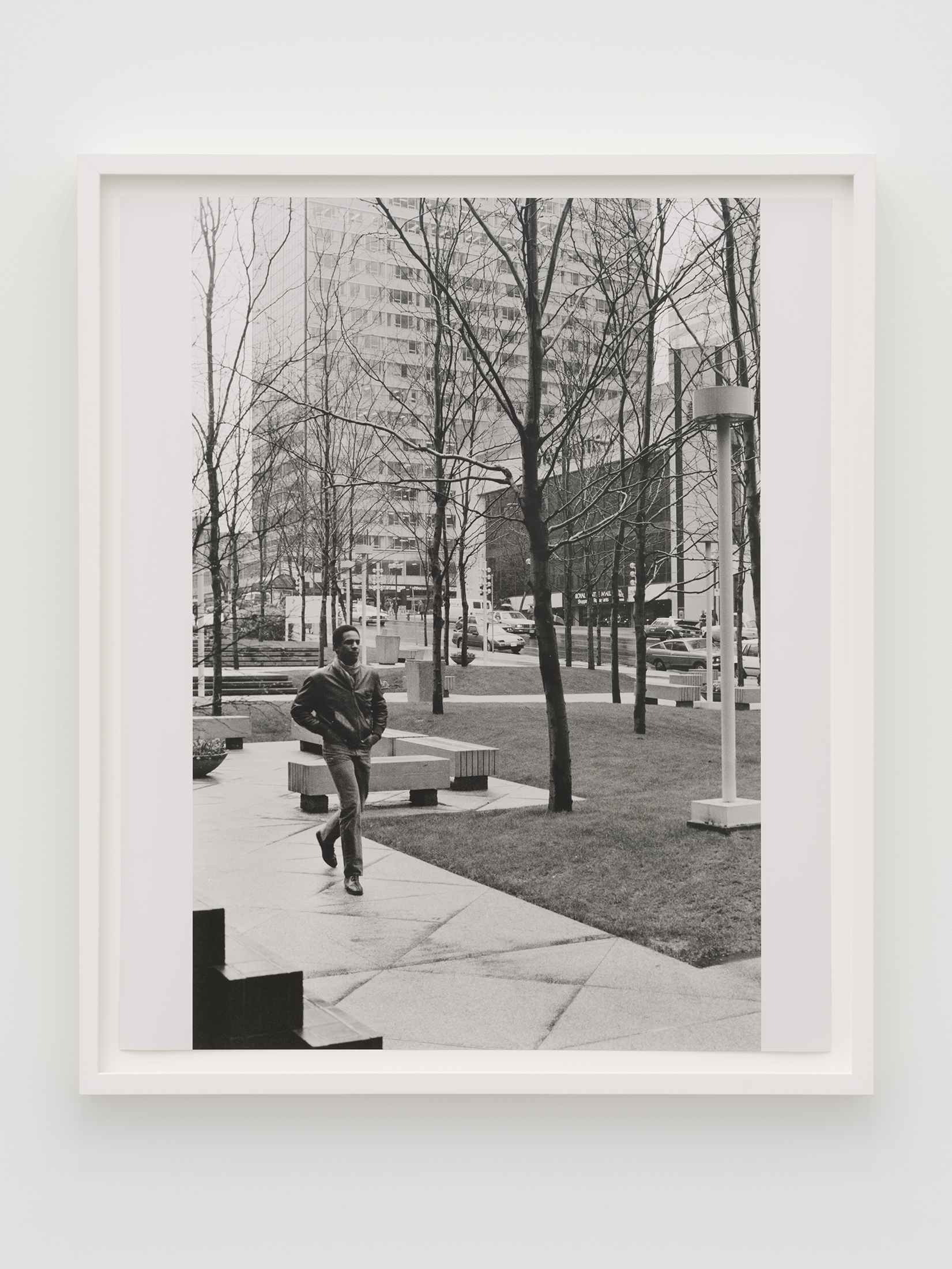
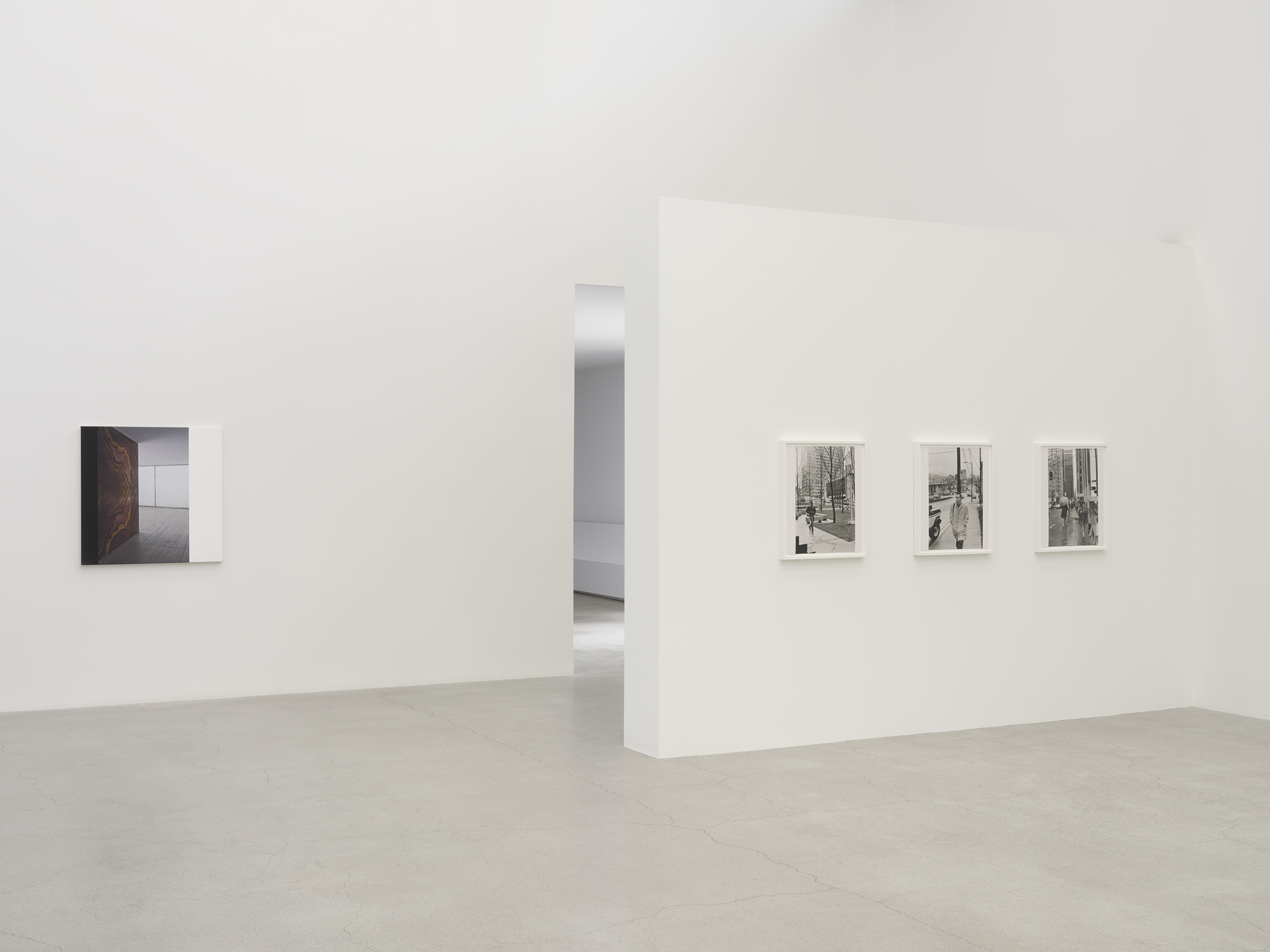
The political theme of Clayoquot Protest concerns above all the relation of the individual to the superstructure. … I have also explored this theme in a series of works titled My Heroes in the Streets, in which individuals [specifically artists] are shown as autonomous but alienated subjects immersed in the urban environment. In contrast, Clayoquot Protest shows individuals engaged in collective, communicative action in order to protect the natural environment from devastation.5
Wallace emphasizes that this situation represents a moment when the order of the day is upset, as gathered protestors choose ethical action over lawful status quo. The political content here is self-evident, just as the texts of the protestor’s signs remain relevant decades later. But what of the collectives depicted elsewhere in his work, those gathered on construction sites, in museum galleries, or on street corners? The commuter, like the skyscraper, is too multivalent to be defined by their function alone. We glean only their general participation in the collective project of society, commuting along the crooked path of historical progress.
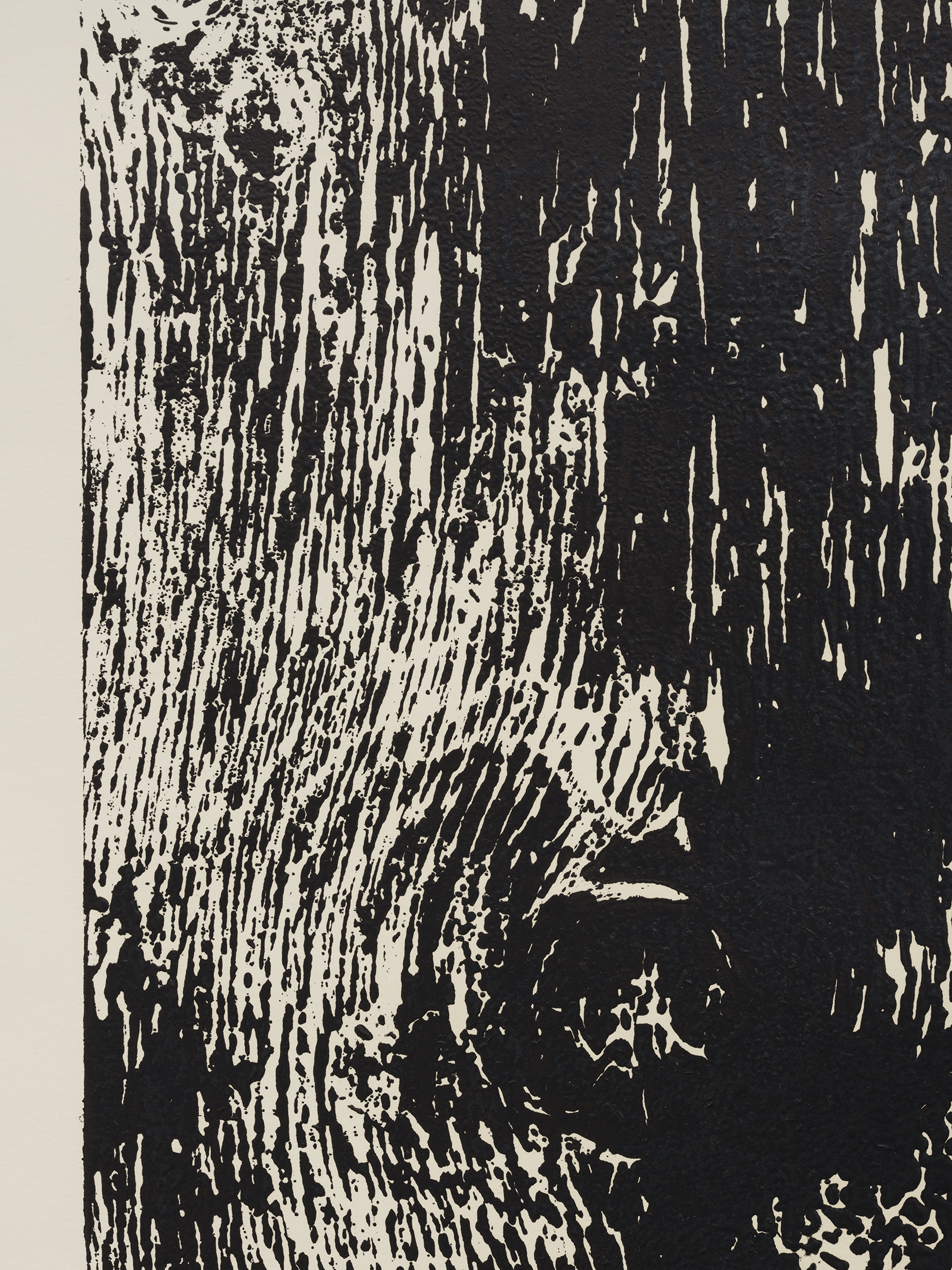
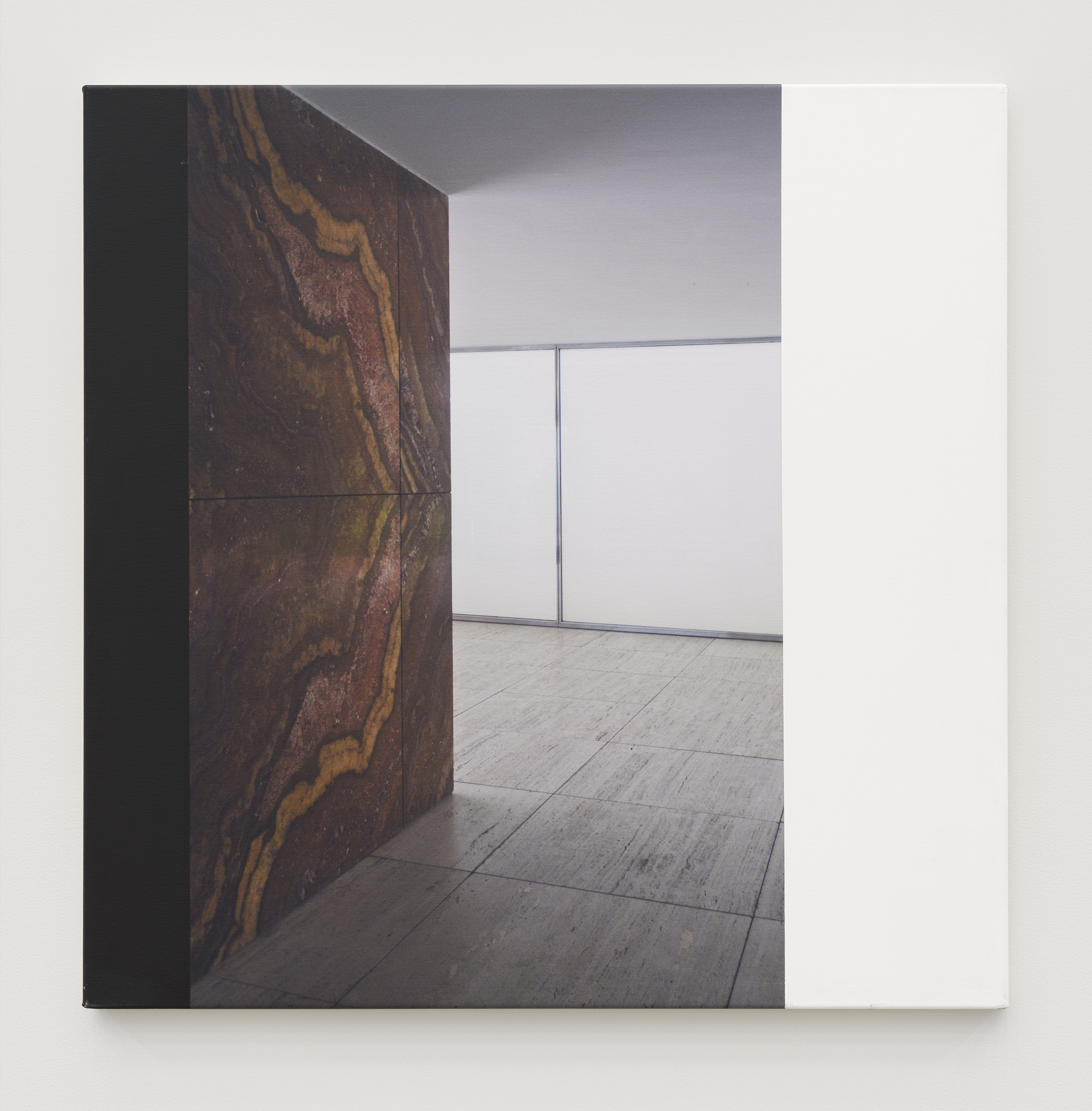
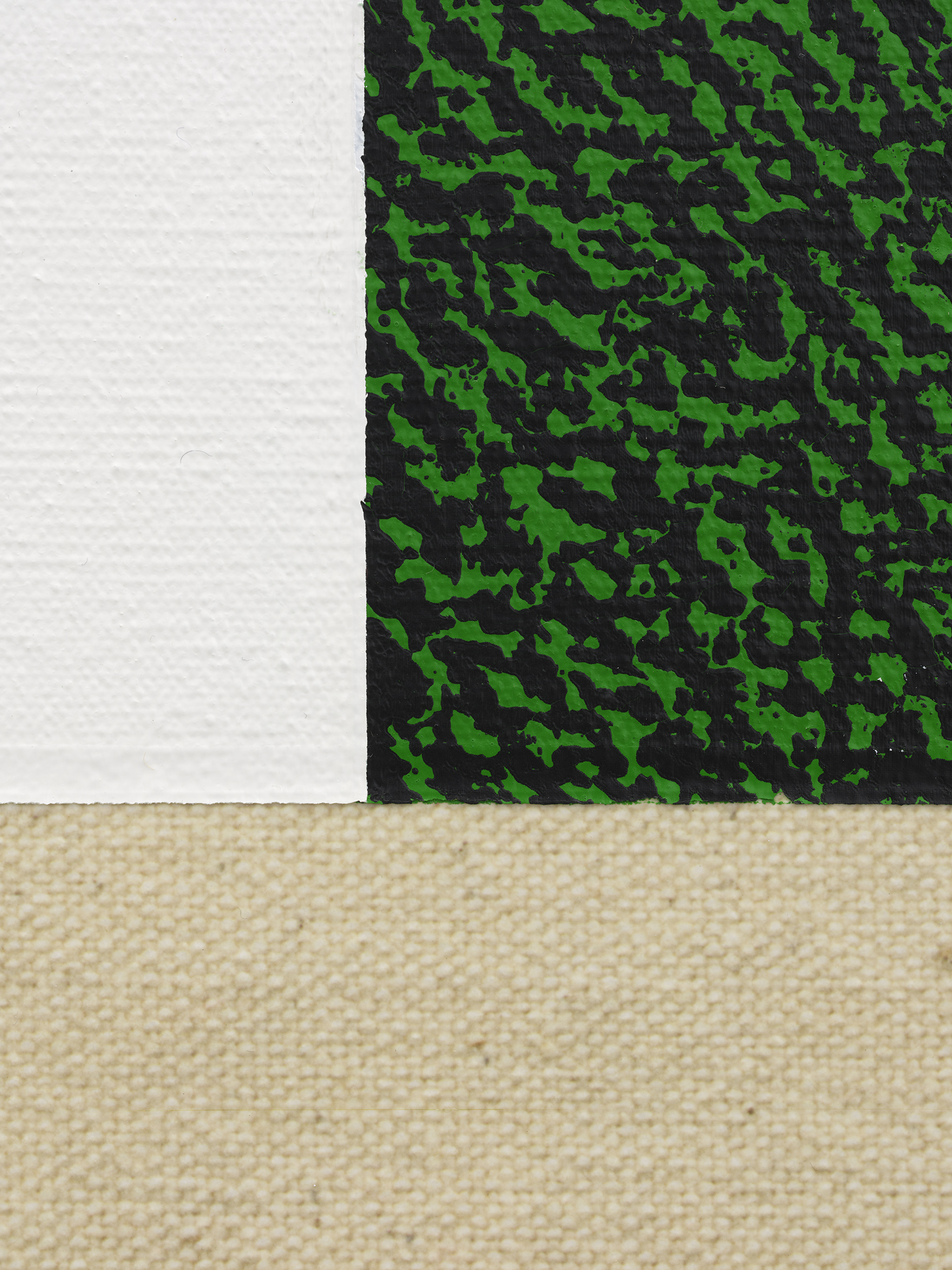
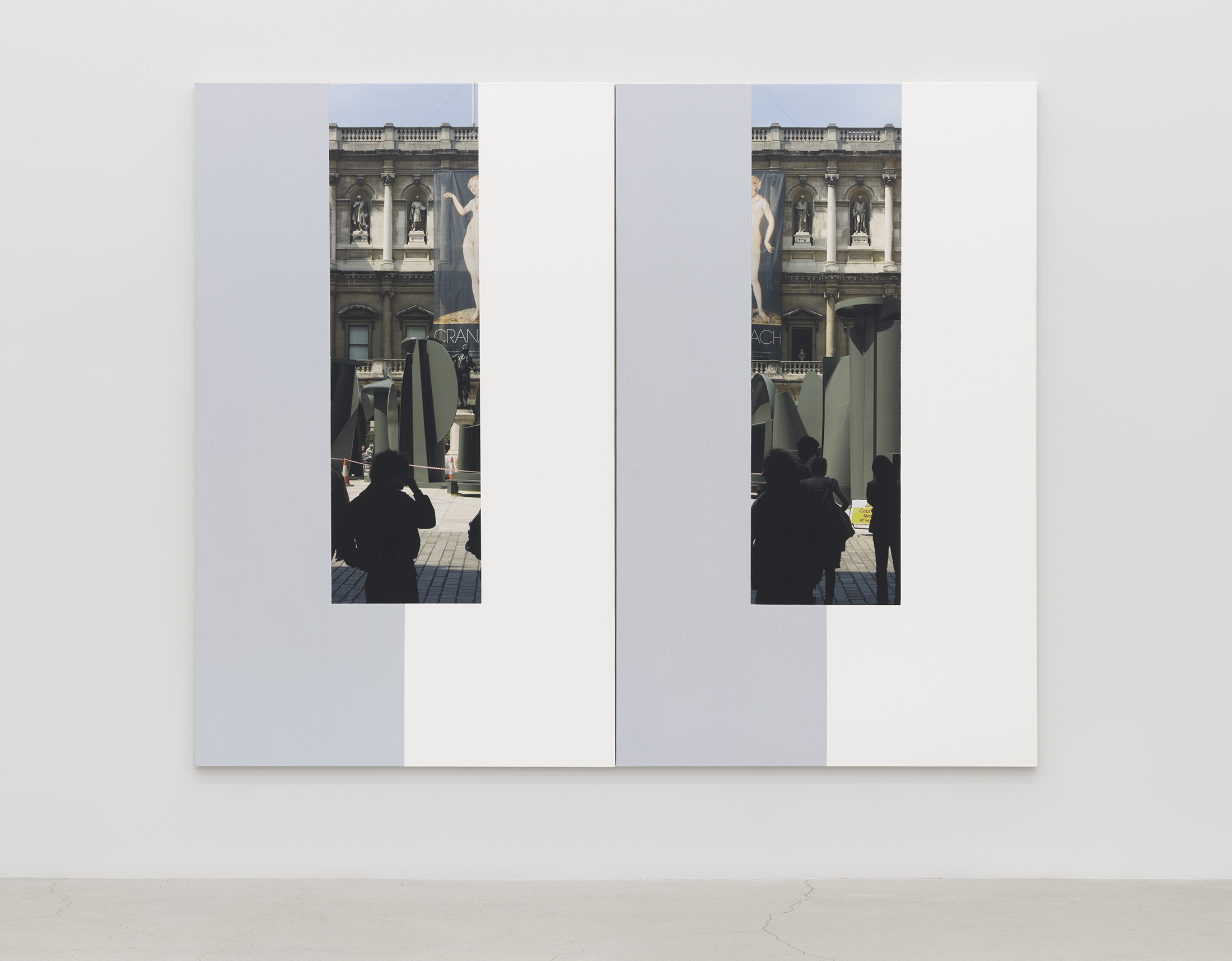
But the depiction of artists in My Heroes in the Streets, where figures differentiate themselves from the anonymity of daily street life, seems to be in antagonism to the depiction of artworks in Mies Pavilion Barcelona II (2009), Royal Academy Courtyard (2008), and Abstract Composition (La Défense, Paris) I–III (2011), where art resembles the opaque facades that clad the storehouses of capital. The bare wooden stretchers of In the Studio (With Canvas) I–V (2014), surrounded by swatches that evoke the tactility of painted surfaces, allow us to perceive something of the creative act, not yet settled into the shape of a public monument or disregarded artifact. In these instances, the imaginary space of a picture is imaginary in the sense of inviting, maybe even inspiring, and not yet wholly ideological.
He writes that, “[i]f we accept that history is constructed not just from events in themselves but also how they are presented as images and disseminated as beliefs which operate in the arena of mass spectatorship, a fully-conceived work would thus need to critique the form and function of these images.”6
Wallace’s decision to work at scale on canvas, incorporating documentary photography as a constituent but not singular element of the picture, is an attempt to create “history paintings” from within the so-called post-historical tradition of modernist picture-making. Therefore, these works emphasize the material conditions of the support and frame alongside the depicted subjected matter in order to capture—even synecdochally—the conditions of modern life. Wallace’s histories begin with himself, his peers, and local events illustrating the autonomous but alienated shape of the present.
For Wallace, it is not just that laying bare the structure of a picture—or the realpolitik of society—leads to a more honest (that is, less deceitful) kind of representation. It’s that the structure is already embedded within the picture plane, and art does not necessarily illustrate ideas as much as it “tunes the eye to the visual complexity of everyday life.”7
-
1. Ian Wallace, “The Pictorial Equation and Its mise en abyme”, 2017.
-
2. Ibid.
-
3. Wallace, “Notes on Supports and Surfaces: Canvas, Wall, Page, Table, Floor, Street”, 2017.
-
4. Ibid.
-
5. Wallace, “Clayoquot Protest (August 9, 1993)” in Clayoquot Protest (August 9, 1993), ed. Helga Pakasaar, Art Gallery of Windsor, 1997.
-
6. Ibid.
-
7. Ian Wallace and Josh Thorpe, “Rewind: Fragments of a Conversation” in Ian Wallace: The Economy of the Image, ed. Gregory Burke, The Power Plant, Toronto, 2010.
Documentation by Rachel Topham Photography.